



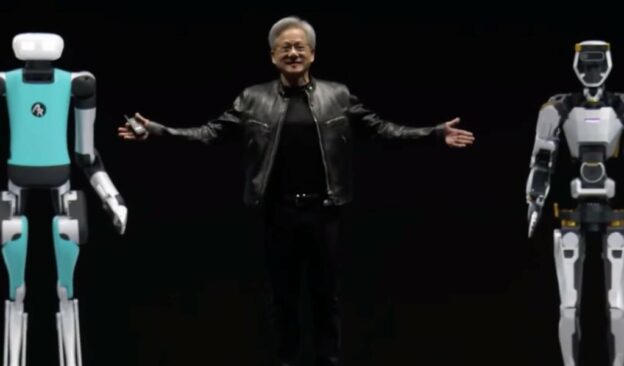
Huang’s explanation of his ‘no task is beneath me’ policy gets to the heart of what it means to be a great leader.
Ask the average person on the street to name the company at the heart of the current AI craze and they’ll probably say OpenAI, with its jaw-dropping public tools, lightning fast growth, and globe-trotting CEO. But ask anyone with any tech expertise, and they’ll give you another answer — Nvidia.
Since its founding way back in 1993, Nvidia has built the chips that powered wave upon wave of tech innovation. After taking a risky early bet on machine learning, the company is now the foremost provider of the chips driving the AI boom, a success that is reflected in the company’s soaring stock price and $2+ trillion market cap (yes, that’s trillion with a “t”). Just this week the company is hosting a gathering dubbed “the Woodstock of AI” to unveil hotly anticipated new technology.
And unlike many tech behemoths, Nvidia has been led since the start by the same person, co-founder Jensen Huang. A Taiwanese immigrant who had a tough start in life, Huang is now worth in the neighborhood of $80 billion thanks to leading his firm to the bleeding edge of tech innovation.
How has he stayed on the top so long in such a fast-changing, competitive industry? In two recent appearances at his alma mater, Stanford, he talked through his leadership style (and much else concerning Nvidia’s vision of the future of AI).
Both his comments at the Stanford Institute for Economic Policy Research and the Business School’s View From the Top series are well worth a full watch. But just five words from the two hour-long talks encapsulated Huang’s thinking and offer a leadership masterclass that just about anyone can benefit from.
“No task is beneath me.”
When View From the Top interviewer Shantam Jain asks Huang to talk about how he thinks through designing his organization and how listeners should think through designing theirs, Huang kicks off his answer with five simple words: “No task is beneath me.”
At first blush, this seems like radical humility coming from a billionaire CEO. And it is. Huang goes on to joke about his early menial jobs and how they’ve left a mark on his mindset.
“I used to clean toilets. I cleaned a lot of toilets. I’ve cleaned more toilets than any of you combined, and some of them you just can’t unsee,” he says to chuckles from the audience.
It’s a refreshing dose of humility, a skill others — including psychologists, Jeff Bezos, and Wharton professor Adam Grant — have called out as an essential foundation for leadership success. Humility, these diverse thought leaders say, helps us keep an open mind to new information, connect with others, and make better decisions.
So humility for humility’s sake is a smart move from Huang. But he goes on to say that his “no task is beneath me” motto is about more than fighting arrogance and complacency. It’s also about empowering those who work with him.
On humility and empowerment
As Huang explains in greater detail in his Stanford Institute for Economic Policy Research remarks, he has — unusually, for a CEO — more than 50 direct reports, who he manages with a hands-off style. These reports have no written reviews or regular one-on-ones with the boss and are largely left alone unless they have an issue they need help with.
“Then I’ll drop everything for them,” Huang says.
Why? Huang explains: “In that way our company was designed for agility, for information to flow as quickly as possible, for people to be empowered.”
Huang is willing to drop anything and help his team with anything not just because, evidently, he’s a down-to-earth guy. He also does it because he sees his main role as mentoring employees so they can be empowered to respond agilely and independently.
“Our position in the company should have something to do with our ability to reason through complicated things, lead other people to achieve greatness, inspire, empower, support other people. Those are the reasons why the management team exists, in service of all the other people that work in the company,” Huang adds in View From the Top.
His willingness to do whatever is asked of him is at heart a willingness to support others and help them get to the point where they don’t need him. It’s a vision of leadership that’s all about reducing the need for leadership. And it’s not only Huang who endorses it.
Other impressive leaders agree
Former U.S. nuclear submarine commander Captain David Marquet, for instance, has spoken movingly about how he aimed to give no orders except the final one to fire weapons. Orders make yes men (and women). The best leaders create teams that require the least leadership. They do that by putting ego aside to serve, teach, and support.
So next time you’re thinking a task is beneath you as a leader, or that you’d save a lot of time by just ordering someone to do something in a particular way, remember Huang’s “no task is beneath me” mantra. Helping with the little things doesn’t lower your stature as a leader, it raises the capabilities of your team. And that’s the ultimate aim of great leaders.
https://www.inc.com/jessica-stillman/5-words-jensen-huang-founder-2-trillion-nividia-masterclass-leadership.html