



Company sees strong growth despite missing Wall Street expectations
Oracle has more than $455 billion in remaining performance obligations (RPO) at the end of its first quarter of fiscal year 2026.
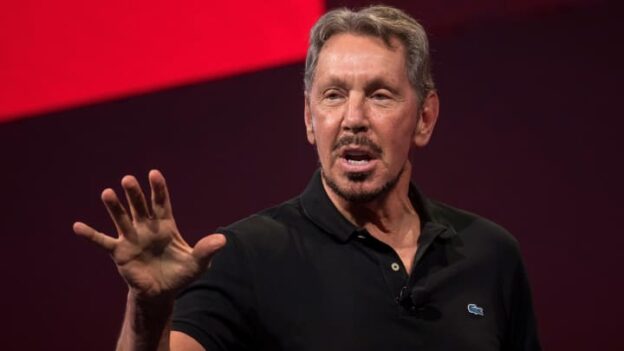
Speaking at the company’s earnings call on September 9, CEO Safra Catz noted that the company had signed several “significant cloud contracts with the who’s who of AI,” including OpenAI, xAI, Meta, Nvidia, and AMD. This included four multi-billion-dollar contracts with three customers in Q1.
One such contract was the $30bn-a-year contract with OpenAI in July 2025.
The RPO catalog is up 356 percent year-over-year (YoY), and up from $317bn in Q4 of FY2025. Catz added that she expects Oracle will “sign additional multi-billion dollar customers and that RPO will likely grow to exceed half a trillion dollars.”
In terms of revenue, total cloud revenue for the quarter was up 27 percent YoY to $7.2bn, while cloud infrastructure revenue was $3.34bn, up 54 percent YoY. Catz noted that OCI consumption revenue grew 57 percent, and “continues to dramatically outstrip supply.”
Oracle’s multicloud offering, in which it houses Oracle hardware in the data centers of other cloud providers, including Microsoft, Google, and Amazon Web Services, has seen significant growth, up 1,529 percent. Catz said that the offering is now in 34 data centers, and Oracle has plans to launch in another 37.
In total, revenue for Q1 was $14.9bn, up 11 percent YoY. The previous quarter saw revenues of $15.9bn. Operating income for Q1 increased seven percent to $6.2bn. While this was slightly lower than Wall Street expectations, Oracle is expecting big growth in the coming years.
Catz said that the company now expects Oracle Cloud Infrastructure to reach $18bn this fiscal year and “then increase to $32bn, $73bn, $114bn, and $144bn over the following four years,” with much of that already booked into the existing RPO.
The company is currently expecting capex for FY2026 to be around $35bn, though Catz said it could be a little higher, which is “good news because it means more capacity has been handed over.”
For comparison, Google expects to spend $85bn, Microsoft has pledged $80bn in spending, Amazon $100bn (including warehouses), and Meta $60-65bn.
During the call, Catz reiterated that Oracle doesn’t own the physical data centers it uses, though lists this as a positive for the company.
“I’ve said very clearly beforehand, we do not own the property. We do not own the buildings. What we do own and what we engineer is the equipment, and that’s equipment that is optimized for the Oracle Cloud. It has extremely special networking capabilities. It has technical capabilities from Larry and his team that allow us to run these workloads much, much faster. As a result, it’s much cheaper than our competitors, depending on the workload. Now, because of that, what we do is we put in that equipment only when it’s time. Usually, very quickly, assuming that our customer accepts it, we’re already generating revenue right away,” she said.
This was backed up by chairman and CTO Larry Ellison, who told analysts: “We just turned over a giant data hall to one of our customers. The acceptance time could have been as long as a couple of months. It was one week. It was one week from the time we, quote, “officially owned the equipment,” and they were testing it to the time they started paying for it.”
Ellison was also keen to emphasize the opportunity that AI inferencing will present to the company. While AI training is currently a huge driver for Oracle, Ellison said: “It’s AI inferencing that will change everything. Oracle is aggressively pursuing AI, and we’re not doing badly in the AI training market, by the way. [But] inferencing is bigger.
“Oracle is aggressively pursuing the inferencing market, as well as the AI training market. We think we are in a pretty good position to be a winner in the inferencing market because Oracle is by far the world’s largest custodian of high-value private enterprise data.”
Within this, Ellison noted that the company’s launch of an AI database offering will support this.
Unmentioned during the earnings call were the global layoffs. DCD exclusively reported that a large number of workers were cut by Oracle in August 2025. The job cuts have continued through to September.
https://www.datacenterdynamics.com/en/news/oracle-has-455bn-in-remaining-performance-obligations-at-end-of-q1-2026/