



Nvidia Corp. (NASDAQ:NVDA) is helping robotics companies scale physical artificial intelligence into real-world industrial applications, introducing new models and frameworks in March designed to move AI systems from simulation into real-world deployment.
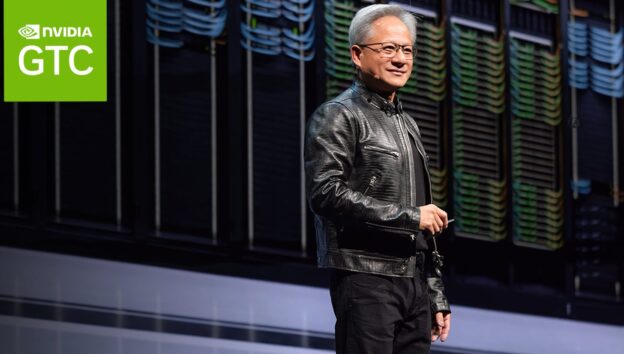
CEO Jensen Huang said the shift marks the end of purely digital automation. “Every industrial company will become a robotics company,” Huang said at Nvidia’s GPU Technology Conference last month.
Largest Company end of June?
$3,919,867 Volume
Ends on Jun 30, 2026
His comments came as the chip giant’s market valuation surpassed $5 trillion last fall, according to media reports. The surge reflects growing demand for the chips powering AI models and data centers, as well as emerging use cases in robotics.
Don’t Miss:
“Nvidia hitting a $5 trillion market cap is more than a milestone; it’s a statement, as Nvidia has gone from chip maker to industry creator,” Hargreaves Lansdown Senior Equity Analyst Matt Britzman reportedly told Reuters.
The Move Toward Physical AI
Nvidia, originally known for its gaming graphics cards, now supplies chips used in data centers running large AI models. The company is extending those capabilities into robotics and industrial automation systems.
As robotics becomes more AI-driven, manufacturers are using simulation tools to model shop floor environments before deployment. Nvidia is positioning its Omniverse and Cosmos platforms for that use, along with its GR00T initiative for robot intelligence.
The company said last year that its platforms are designed to support simulation, training and deployment of AI-driven systems across industrial environments.
Trending: Avoid the #1 Investing Mistake: How Your ‘Safe’ Holdings Could Be Costing You Big Time
“Physical AI has arrived,” Huang said at the GTC conference. “We’re working with partners to implement our physical AI models so that we can deploy these robots into manufacturing lines.”
Adoption Across Robotics And Manufacturing
Robotics firms are using Nvidia’s software to support digital twins and sensor processing. In the U.S., developers are using the company’s frameworks to accelerate the training of robot systems.
The impact is reaching major consumer supply chains. Skild AI is partnering with contract manufacturer Foxconn to enhance production of electronic devices, including iPhones and Nintendo consoles.
Adoption is also moving beyond large industrial firms to smaller manufacturers. Nvidia said last month that companies such as Workr are using its Omniverse platform to help smaller manufacturers deploy robotic systems without extensive programming.
See Also: Skip the Regrets: The Essential Retirement Tips Experts Wish Everyone Knew Earlier.
Challenges And What Comes Next
The transition to AI-driven robotics is not without hurdles. While manufacturers are projected to more than double their use of AI and automation by 2030, a recent PwC survey found the biggest obstacle remains preparing the workforce for the shift.
Another challenge is validating how AI-driven systems will perform in real-world environments before deployment, as robotics systems become more complex.
Other technology leaders, including Microsoft (NASDAQ:MSFT) and Google are also building on Nvidia’s technology to develop their own physical AI models and applications, according to Forbes.
Nvidia is positioning its platform as part of a broader ecosystem supporting developers and manufacturers working to bring AI-powered systems into production.