



and it could consume 20% of Louisiana’s power
In July 2024, commissioners in Richland Parish, Louisiana — a rural area close to the state’s northern border with Mississippi — quietly approved billions of dollars in tax breaks for a Delaware-registered company called Laidley LLC, according to a detailed investigation by Sherwood News‘ tech reporter Jon Keegan (1). Laidley LLC had proposed a “multi-billion-dollar datacenter campus” that promised “several hundred new good paying jobs,” under the code name Project Sucre.
Turns out, Laidley is actually a subsidiary of Meta (NASDAQ: META) (2), Mark Zuckerberg’s $1.6 trillion social behemoth, the owner of Facebook, Instagram, and WhatsApp. There was also a new name for Project Sucre: Hyperion, an AI data center that would cost north of $10 billion to build, which Zuckerberg described on Threads (3) as “so large it would cover a significant part of Manhattan.”
Must Read
-
Thanks to Jeff Bezos, you can now become a landlord for as little as $100 — and no, you don’t have to deal with tenants or fix freezers. Here’s how
-
Robert Kiyosaki says this 1 asset will surge 400% in a year and begs investors not to miss this ‘explosion’
-
Dave Ramsey warns nearly 50% of Americans are making 1 big Social Security mistake — here’s how to fix it ASAP
How Louisiana handed Meta a $3.3 billion tax break
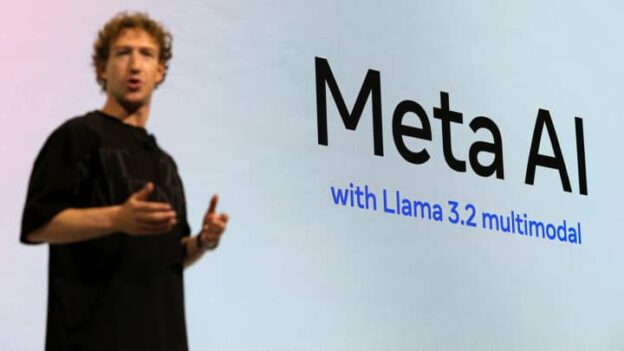
Hyperion will stretch across 2,250 acres of former state-owned farmland to power Meta’s Llama AI models.
Under a bill that moved quickly through the state legislature (4), Hyperion will be exempt from state and local sales and use taxes on its data center equipment — including the GPUs that train and run AI models — for 20 years. Louisiana’s combined state and local sales tax stands at 9.56%, according to the Tax Foundation (5), and Sherwood News reports Meta is spending roughly $35 billion for the GPUs of this data center. That means if those purchases were taxed, Louisiana would collect more than $3.3 billion; Sherwood points out this would be enough to fund the state’s police budget for more than seven years.
The land arrangement is unusual, too. The Advocate (6), Louisiana’s largest daily newspaper, reported that Meta initially wanted to buy the 1,400-acre core parcel outright but was blocked by state law requiring a public bid. Instead, Meta pays $732,000 a year in rent, with an option to buy the property for $12 million before the lease ends.
In exchange, the company has pledged $200 million in local infrastructure improvements, $1 million a year to Entergy’s low-income ratepayer support program, and 1,500 megawatts of renewable energy built in partnership with the utility.
https://finance.yahoo.com/economy/policy/articles/meta-got-3-3-billion-101500029.html