




With rising gas prices and geopolitical uncertainty dominating headlines, the outlook for summer travel is uncertain — but one should never doubt the human need to unwind. Across airlines, lodging and other sectors, here are four trends to pay attention to as the seal breaks on the sunscreen.
Travel appeals, but the budget-conscious consumer is showing signs of hesitancy
In the U.S., spending on travel and entertainment expenses not including airlines (think amusement parks, car rentals, tourist attractions, arcades and cruise lines) actually increased 15.6% year over year in the month of April, according to Chase credit card data. That being said, there is a meaningful divergence between upper- and lower-income consumers with regard to travel decisions.
“Much has been written about the K-shaped economy, and air travel seems to be illustrating the trend,” said Jamie Baker, J.P. Morgan’s North American airline analyst. “While the higher-end consumer is exhibiting very strong demand for premium products and international travel, the more price-sensitive consumer is not exhibiting the same level of resilience.”
This trend is evident globally: travel data from China’s Labor Day (which occurs on May 1) showed softness and flat demand. “Flight cancellations have edged up recently due to a rise in fuel prices, and air traffic during the Chinese holiday period fell 5.7% year over year,” noted Tiffany Wang, an emerging markets strategist at J.P. Morgan. And though Chinese railway bookings were up, “that resilience in travel volume masked a still-tepid consumption picture. Total tourism spending increased just 2.9% year over year, implying lower per-trip spending than last year,” she said.
Airlines are feeling the heat from fuel repricing — and responding accordingly
With constraints on crude oil mounting, prices on jet fuel have nearly doubled across Asia, Europe and the U.S. Many airlines are passing these increased costs on to consumers.
“In Europe, jet fuel prices remain more than 60% higher than pre-conflict levels. European flag carriers are expected to pass through about 60% of fuel costs via higher ticket pricing in the second quarter, while short-haul carriers have shortened booking windows and stimulated pricing into peak summer,” said Harry Gowers, the lead analyst for European Airlines at J.P. Morgan.
In other cases, airlines are cancelling routes to manage costs. In April, 19 of the top 20 global airlines — including Lufthansa, Delta, United and Air France-KLM — slashed flights, hinting at further summer cuts if fuel costs continue to surge. “Capacity cuts are expected into winter if fuel remains elevated,” Gowers added.
Airlines affected
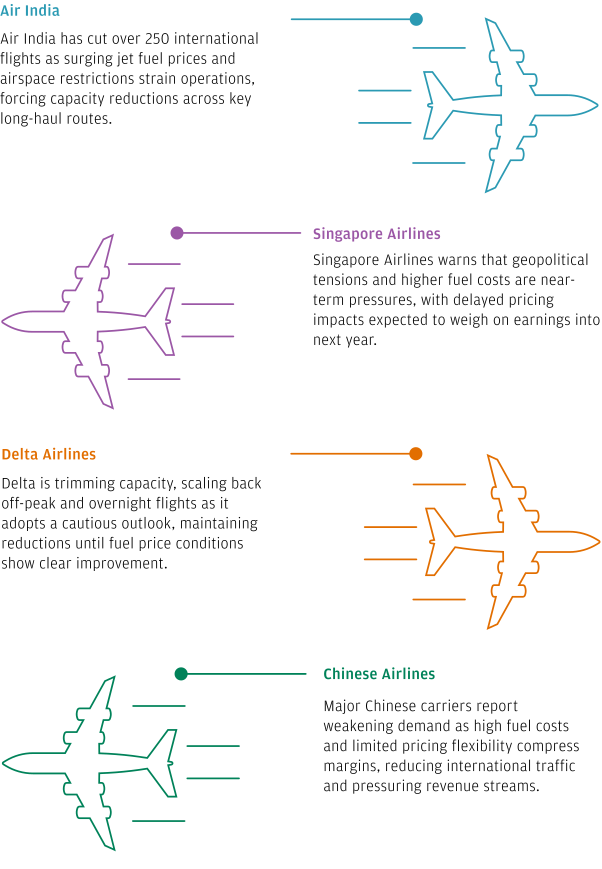
Among the airlines affected:
- Air India: The airline has reduced over 250 international flights due to the spike in jet fuel prices and airspace restrictions.
- Singapore Airlines: In a recent earnings call, company management flagged geopolitical tensions and higher jet fuel prices as key near-term headwinds, with the full cost drag likely flowing into next year given lagged pricing.
- Chinese airlines: Chinese airlines and airports, including the “big three” of Air China, China Eastern and China Southern, are reporting a sharp deterioration in demand given elevated fuel costs and constrained pass-through mechanisms. These, they believe, are compressing margins and eroding international traffic revenue simultaneously.
- Delta Air Lines: Delta has meaningfully reduced capacity in the current quarter, emphasizing a “downward bias until we see the fuel situation improve,” according to Ed Bastian, Delta’s CEO. Specifically, the company says it will be pulling back on “edge-of-day flying” (the earliest morning and latest evening departures, considered off-peak by airlines) as well as red-eye (overnight) flights.
Travel bookings may be delayed
Despite increasing costs and fewer flights available, data shows more bookings are being made closer to the date of departure than in past travel seasons.
“Whether stemming from concern over the economic outlook, or nerves induced by extensive press coverage of possible summer fuel shortages, booking patterns in Europe have been shifting closer to departure dates, particularly for short-haul travel,” noted Danielle Ward, an analyst for the European Transportation and Healthcare sectors on the European Credit Research team at J.P. Morgan. “Data from a leading European tour operator in mid-May showed this to be particularly apparent in the U.K., where summer 2026 bookings are tracking -10% behind the same time last year, comparing to a -7% lag for all geographies.”
This shift in behavior is causing adjustments on the supply side in a way that may translate into last-minute deals for consumers. “As customers hesitate to pull the trigger on bookings in a competitive market, low-cost airlines and tour operators are embracing lower ticket prices to fill seats, at a time when input costs (notably fuel) have materially increased (though fuel hedging programs provide some shield to varying degrees across the European travel sector),” Ward added.
The World Cup is expected to provide a singular boost to North American travel
In June and July, the World Cup will bring 48 teams to North America to play 104 matches across 16 cities (11 in the U.S., three in Mexico and two in Canada). The event is slated to attract 7.2 million spectators, and demand for tickets appears to be robust. When FIFA launched its Random Selection Draw ticket sales phase, almost 500 million requests were made for just 7 million tickets available.
Analysts at J.P. Morgan estimate that the World Cup could generate almost a billion dollars in incremental hotel room revenue across North America — and that’s just for lodgings. From rideshares to restaurants to resales of tickets, this massive event is expected to impact multiple industries.
But the true impact may be hard to predict. “Some countries could see softer travel demand during the World Cup window as consumers stay home to follow the tournament — a displacement effect noted by online travel agencies around prior world events,” said Doug Anmuth, head of J.P. Morgan’s U.S. Internet equity research team. “A recovery in travel demand, and macro headwinds including elevated costs and geopolitical uncertainty, are two opposing forces we will be watching closely following the tournament to assess the full impact.”
How these trends play out — and how changes in the geopolitical realm shape their prev
— will be worth watching for travelers and businesses alike in the season ahead.
https://www.jpmorgan.com/insights/global-research/travel/summer-outlook?utm_source=sfmc&utm_medium=email&utm_campaign=2875001_Prod-Si-WeeklyNewsletterV7&utm_term=&emailType=Strategic%20Intelligence%20Weekly&ske=MDAxNjgwMDAwMFlrYUlEQUFa