



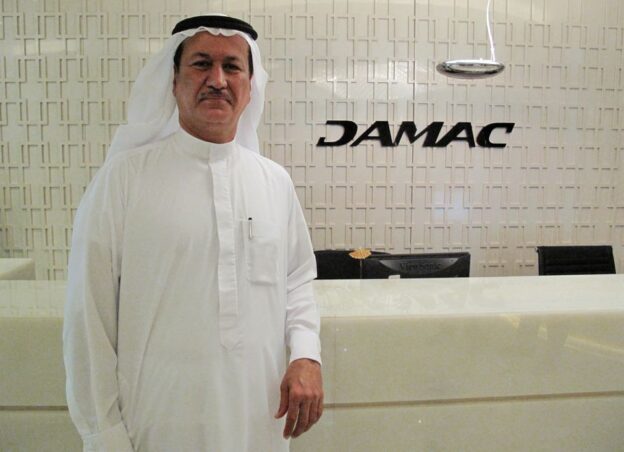
“I went into Anthropic at a US$18 billion valuation, and it is now going public at about US$1.4 trillion. At one point, a few weeks ago, there was a US$2 trillion valuation, but still, I’m happy with $1.4 trillion.”
“I started my first business in catering in 1983. In December 2013, I went public on the London Stock Exchange, so that’s 30 years. What I made in 30 years, I made from Anthropic in less than two years,” said Hussain Sajwani, founder and Chairman of DAMAC Group, as Anthropic prepares for its initial public offering on the Nasdaq on Thursday, November 19, 2026, with a valuation estimated between US$1.26 trillion and US$1.41 trillion.
“I went into Anthropic at a US$18 billion valuation, and it is now going public at about US$1.4 trillion. At one point, a few weeks ago, there was a US$2 trillion valuation, but still, I’m happy with $1.4 trillion,” Sajwani added at Bloomberg Invest Dubai.
Sajwani is the founder of DAMAC Group, a privately owned conglomerate he founded in 1982 that has diversified across sectors, with 10,000+ employees from over 100 nationalities. The group’s investment arm, DAMAC Capital, invests in tech, finance and life sciences.
“We’ve been investing in technology for a long time. I had an office in Silicon Valley in 1998 and 1999, and then I lost a lot of money. Then I shut down that office. But I’m very persistent. So I went back about 12 years ago.
“Today, we have a portfolio that includes Anthropic, OpenAI, xAI, and more than 30 other companies. In just three companies, Anthropic, OpenAI, and SpaceX, we’re making huge money.”
Sajwani has gone from a property developer to one of the Gulf’s most ambitious data center builders. The group’s data center business, DAMAC Digital, was launched in 2021. Today, it operates data centers in 13 countries around the world, and five global hyperscalers have signed partnership agreements, Sajwani said.
“Our focus is on large data centers, which are 100 MW and above. They are mostly liquid-cooled, designed for AI chips. And we’re going to put those where the large populations are. So the US, the EU, and Asia,” Sajwani said. “The cost of data centers is going up. Probably in the last couple of years, it has gone up by 30%. And it may go up by another 20 to 30%. The most expensive today is, naturally, in Europe and the US.
“Asia is cheaper because you get cheaper labor. And you can use some Chinese equipment, like generators and so on. Europe and America are restricted to using European or American equipment. So, the cost is higher there.
“Europe is also a challenge because of environmental and zoning rules and, honestly, some regulations that are total nonsense. And it takes years and years to sort them out. It’s a very difficult market to operate in from an investment point of view and in terms of speed.
“Still, if you find land with power, the US is the best, because you get a better rate.”
In January 2025, Sajwani announced a US$20 billion investment in US data centers alongside then President-elect Donald Trump at his Mar-a-Lago estate in Florida. The investment, to be deployed over four to five years through DAMAC Digital, targets eight US states.
“Naturally, after the US midterms, there will be some changes because they will be stricter on data centers and environmental issues,” Sajwani said. “I expect that the supply of data centers in the US will now shrink, so we are going to look outside. We are already in serious negotiations to purchase land in the UK and Australia.
“I think what everybody is trying to figure out at the moment is where the most efficient place to put data centers is.”
Sajwani concluded by highlighting that rising costs are less of a concern than growing supply chain constraints. “The bigger challenge is not the cost, because for me as a developer, when the cost goes up, I pass it on to the hyperscalers,” he said. “The bigger challenge is the supply chain, which is becoming more and more delayed. That’s the bigger challenge.”
DAMAC’s Hussain Sajwani Says His Anthropic Investment Made Him More Money Than 30 Years in Business
