



India has received $11-12 billion in investment proposals, aiming to build a supplier ecosystem and create nearly 100,000 jobs in chip design, manufacturing and R&D.
India has received investment proposals worth $11-12 billion under the second phase of its semiconductor programme, as the government looks to expand the domestic chip industry’s network of suppliers, IT Minister Ashwini Vaishnaw said on Thursday.
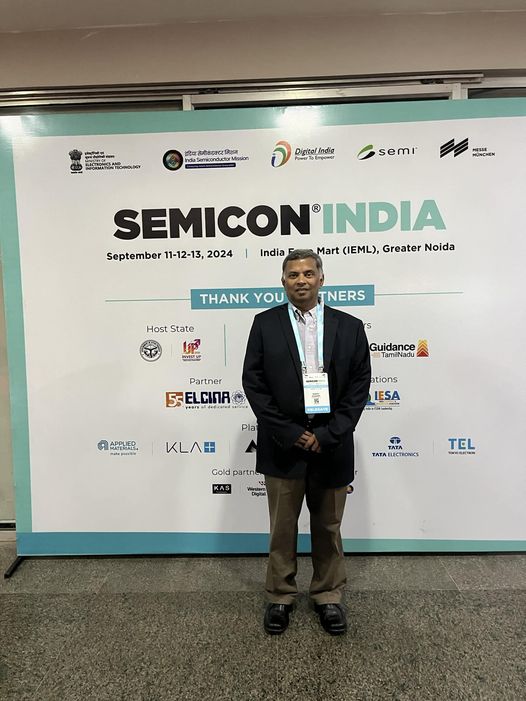
Speaking to the press at Semicon India 2026, Vaishnaw said the proposals span semiconductor equipment, materials, gases, chemicals and substrates. The investments are expected over the next two to three years, although he did not identify the companies involved.
“The investment numbers that we are seeing today are of the order of Rs 1 lakh crore, or about $11-12 billion. Many of them don’t want us to take their names, but they will make those investment announcements after approvals from their board and shareholders,” Vaishnaw said.
The minister said the broader ecosystem under Semicon 2.0 could create close to one lakh jobs. The expanded Rs 1.27 lakh crore national programme aims to deepen India’s semiconductor capabilities, covering activities from chip design and manufacturing to materials, research and talent development.
Global equipment makers outline investments
The conference also saw investment announcements from Applied Materials and Lam Research, two of the world’s biggest semiconductor equipment companies.
Applied Materials unveiled its India Vision 2035, committing $5 billion over the next decade towards research and development, expansion of the domestic semiconductor supply chain and talent development. The company also announced a 140-acre advanced semiconductor research park and said it aims to increase its India-based supply-chain capacity ten-fold by 2035.
Lam Research announced plans to invest around Rs 10,000 crore over the next several years to establish its first silicon-component manufacturing facility in India and expand advanced R&D operations.
The proposed facility will cover silicon ingot production and processing for advanced semiconductor technologies, building on the company’s existing engineering and research presence in the country.
Tata Electronics builds supplier network
Alongside the investment announcements, Tata Electronics signed agreements to develop the supplier ecosystem for its semiconductor fabrication plant in Dholera, Gujarat.
It partnered with Singapore-based industrial real estate developer Ascendas First Space for a 363-acre vendor park around the fab.
Tata Electronics also signed agreements with Japan’s Fujifilm to localise critical semiconductor materials and with JSR Corporation for photoresists and advanced chemicals for the Dholera facility.
The agreements also showed a wider focus of the programme’s second phase i.e. developing the inputs and support infrastructure needed alongside chip factories. “Semicon 1.0 was all about setting the foundation, making sure that we learn to walk. And Semicon 2.0 is more about getting the ecosystem in place,” Vaishnaw said.
Six priorities for the next phase
Vaishnaw said the next phase would rest on six pillars, beginning with chip design. The government will help fabless companies scale and secure funding, while encouraging more startups and large companies to enter semiconductor design.
The second pillar covers machinery and materials. Companies could undertake design work in India or combine design with local manufacturing, providing two routes for participation in the programme.
The third priority is attracting more fabrication facilities across display, memory, silicon and compound semiconductors.
Advanced packaging will form the fourth pillar, reflecting its growing role in improving chip performance and efficiency.
The fifth pillar focuses on applied research and development. The government has invited the industry to propose projects that would be jointly funded by companies and the government, with academic institutions participating in the work.
Talent development will be the sixth pillar. Vaishnaw said around 400 universities and institutes were already training students in chip design under Semicon 1.0, providing a base for the next phase of the programme.
https://www.financialexpress.com/business/industry-12-billion-semiconductor-bet-semicon-2-0-draws-fresh-investment-proposals-4341666/lite/?shem=aimgspc,