



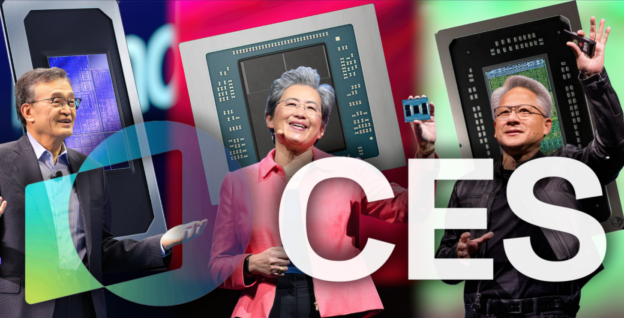
CES 2026 is right around the corner, and being the world’s biggest consumer electronics show, every tech enthusiast out there has their eyes on the event to see what’s there for the future in the world of computing. CES has held a special place in the hearts of our viewers; it’s one of the most exciting seasons for the PC industry. However, this time, the market dynamics are proving to be quite different, especially with the ongoing memory shortages.
We won’t discuss the problems within the memory supply chain extensively, as this topic has already been covered extensively on the site. However, it’s essential to note that with general-purpose DRAM products, such as GDDR and LPDDR memory modules, facing shortages, consumer products will also face pressure. This is one of the reasons why future GPU releases by AMD/NVIDIA are in jeopardy, and more importantly, extensive price hikes are planned for consumer products in Q1 of next year. For now, let’s worry about this later and see what companies have in store for us at CES 2026.
NVIDIA’s ‘AI-First’ Strategy Will Take Center Stage at CES 2026, Potentially Leaving Gamers Without New GPU Launches
One of the most anticipated keynotes at CES 2026 is, of course, from NVIDIA, as Jensen’s presentations at this event have consistently been a delight for gamers over the years. Team Green has been a core part of the PCMR; yet, ever since the AI frenzy kicked in, NVIDIA has shown an intent to move beyond being a gaming company, and this has been reflected in lineups like the RTX 50 series. At CES 2026, we expect this trend to continue, as reports and our analysis indicate that NVIDIA doesn’t plan to showcase the RTX 50 SUPER series at CES, and even if they do, it may come with a twist.
Earlier leaks have suggested that the RTX 50 SUPER SKUs are expected to debut in the market by Q3 2026, which means that even if NVIDIA decides to unveil top-tier models like the RTX 5080 SUPER, retail availability will be quite far. This is driven by the fact that GDDR7 modules are in massive short supply, and to top it off, firms like Intel and NVIDIA plan to utilize general-purpose DRAM memory for inference workloads, as we have already seen with Rubin CPX and Crescent Island. For gamers, there’s little hope that CES will bring a new GPU launch, but who knows? NVIDIA might surprise us.

Now, the AI front would be something interesting to see, especially since at CES, NVIDIA will discuss the successful ramp-up of the Blackwell Ultra and how the next-gen Rubin architecture will unfold. We expect to see an announcement regarding Rubin volume production, as well as the rack-scale clusters being offered by Team Green within the next-generation architecture. We already know that Rubin is on track for H2 2026 mass production, with a market debut expected by Q3-Q4; therefore, Jensen will likely reiterate this timeline.
Details on next-generation networking infrastructure, as well as NVIDIA’s new partnership with Groq, will also be a central point of discussion. However, it’s fair to say that CES might follow a similar trend to what we usually see with GTC keynotes. This is mainly because the retail/investment community closely watches Jensen’s public appearances, and many of them are unaware that CES is primarily focused on gaming and consumer-oriented products. After all, NVIDIA is a $5 trillion mega-empire driven by the AI hype.
NVIDIA’s CES 2026 activities will begin on January 5th, with CEO Jensen Huang delivering his keynote at 1 p.m. PT. As always, we’ll be live from the show floor, so be sure to check the website for exclusive content.
Intel: Full-Scale Panther Lake & Arrow Lake Refresh Showcase, Updates on 18A HVM & Maybe An Arc Battlemage GPU
Intel is expected to go “big” on the consumer side, probably being more focused than its competitors at CES, since this time, the Core Ultra 300 “Panther Lake” series will see its retail launch. Team Blue has been hyping up this particular CPU lineup since the Gelsinger era, hence the industry does have big expectations around Panther Lake. It will be Intel’s first consumer product to feature the 18A process. Based on what we have seen at the Intel Tech Tour and leaks over the past few months, Panther Lake is shaping up to be a competitive product.
The success of Panther Lake SKUs will ultimately determine the outcome of Intel’s 18A HVM, as we already know that the nodes are in mass production at Fab 52 in Arizona. Intel will likely provide an overview of how 18A and its derivatives are expected to be positioned in the foundry roadmap. Although CES isn’t the ideal venue for this discussion, Intel may find it essential to address it, given the significant media attention its foundry products receive. Panther Lake and 18A will ultimately determine whether Intel Foundry has the potential to become the front-runner in the US chipmaking industry.

At the desktop CPU front, Intel is set to showcase Arrow Lake Refresh CPUs, under the ‘Core Ultra 200 Plus’ naming scheme, and there are a total of three SKUs planned. Interestingly, refresh lineups have managed to do well for Intel in the past, similar to what we saw with Raptor Lake Refresh SKUs, so it might be that ARL Refresh CPUs actually turn out to be a viable option for gamers. Eventually, Arrow Lake Refresh will act as an intermediary for next-gen Nova Lake CPUs, which are slated for 2027 according to early reports.
At the consumer GPU front, Intel doesn’t have many options to unveil for now, as we haven’t seen any updates regarding the Xe3 ‘Celestial’ discrete GPUs; however, the firm remains committed to the Arc segment. Our best estimate is that we’ll see the launch of the Arc B770 Battlemage GPU, which is a BMG-G31-based option focusing on the mid-tier segment. The GPU is reported to have 16 GB of GDDR6 memory, with up to 32 Xe2 cores, and it will be the last release before we switch to Xe3.
Another expected GPU announcement would be details around the ‘Crescent Island’ Xe3 discrete GPU, which the company has positioned as an inference-focused option. We do know that Crescent Island was showcased at the ITT, featuring the Xe3P graphics architecture, with 160 GB memory capacity based on the LPDDR5X standard. The GPU is said to be a cost-effective option for inference workloads, and we do expect more details at CES.
Intel will definitely be an entity to watch at this year’s CES, as the firm intends to regain its lost market share in the PC space through aggressive offerings. We’ll be giving a rundown of consumer products around Panther Lake (laptops, handhelds, and mini-PCs), and will drop exclusive images of all the products at the CES showfloor, so stay tuned.
Intel’s CES keynote commences on January 5th at 3:00 p.m. PST, where we’ll see Jim Johnson, Senior VP and GM of Intel’s Client Computing Group, showcasing the new products.
AMD to Showcase Next-Gen Gorgon Point APUs, Zen 5 X3D Refresh Desktop CPUs & AI-Focused Products
AMD’s plans for CES 2026 are extensive, as Team Red has now evolved into an entity that is aggressive in both consumer and AI markets. Starting on the CPU front, AMD’s major release for this year is the Gorgon Point ‘Ryzen AI 400’ lineup, which will succeed the Strix Halo and is said to feature several upgrades. While the lineup does feature the architecture similar to the Ryzen AI 300 family, the significant improvements will come in the form of SKUs seeing upgrades in the core, clock speeds, and iGPU departments. Judging by how well Strix Point and Strix Halo APUs have performed, we expect a similar trend with Gorgon Point as well.

AMD also plans to showcase capable desktop CPUs at CES 2026, and Team Red will stick with the Zen 5 architecture, while also showcasing the X3D-Refresh CPUs, primarily the Ryzen 7 9850X3D and the Ryzen 9 9950X3D2. These CPUs will retain their base configurations, similar to their original counterparts, yet the core difference will come from the cache arrangements. In gaming scenarios, the X3D-Refresh CPUs are expected to dominate the market, given that the 9800X3D has already proven to be a popular option among PC consumers.
At the GPU side, AMD isn’t expected to make any announcements, mainly because we know that RDNA 5 GPUs are slated for mid-2027, and in the meantime, Team Red isn’t looking to launch a discrete GPU. The firm is expected to rely on its existing Radeon RX 9000 series for the next year, and given the ongoing memory shortages, it may become increasingly difficult to acquire the current RDNA 4 GPUs. However, at the AI front, Team Red is expected to make a big announcement at CES as well, which we’ll discuss next.

AMD has made significant progress with its AI portfolio, and now, moving into 2026, the firm is expected to become more aggressive with its offerings. The company is said to rely on the next-generation Instinct MI400 series to compete with NVIDIA in the training segment, backed by the advancements made within the ROCm architecture. More importantly, Team Red has evolved tremendously in the server CPU segment, with its EPYC CPU offerings; hence, at CES 2026, we expect updates on the next-generation Zen 6 Venice CPUs, which will open up a new frontier for the company in the DC market.
AMD’s CEO, Lisa Su, will start her CES 2026 keynote on Monday, January 5, 2026, at 6:30 PM PST, revealing where Team Red is headed.
CES 2026 is set to be an exciting event, and despite memory shortages plaguing the industry, we still expect several interesting announcements to unfold, which will further advance the PCMR. As always, Wccftech will be at the venue, reporting live on every development, hence make sure to check out the website for exclusive scoops and product showcases.
Consumer-Focused Highlights
- NVIDIA – No new consumer GPU launches expected; RTX 50 SUPER unlikely
- Intel – Core Ultra 300 “Panther Lake” launch; Arrow Lake Refresh (Core Ultra 200 Plus); possible Arc B770 Battlemage
- AMD – Gorgon Point “Ryzen AI 400” APUs; Zen 5 X3D Refresh CPUs; no new Radeon GPU announcements expected
AI / Data Center Highlights
- NVIDIA – Blackwell Ultra ramp-up; Rubin architecture roadmap; rack-scale AI clusters; networking and inference updates
- Intel – Crescent Island Xe3 inference GPU; updates on 18A HVM and foundry roadmap.
- AMD – Instinct MI400 accelerator preview; EPYC Zen 6 “Venice” CPU updates
So that’s our preview for CES 2026. Let us know your thoughts and what you expect to see at CES 2026 down in the comments.
https://wccftech.com/ces-2026-preview-here-is-how-the-show-could-look-like/amp/