



Utilities that embrace artificial intelligence will set reliability and affordability standards for decades to come, writes Hari Vasudevan, founder and CEO of KYRO AI.
In Georgia this summer, regulators voted on new rules intended to shield residential customers from cost hikes associated with data centers. It was a quiet ruling with loud implications: The American power grid, once largely invisible, is now colliding head-on with the digital economy driven by artificial intelligence.
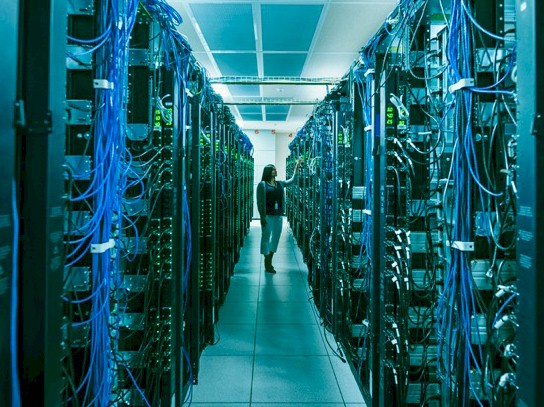
Higher bills aren’t just coming from leaving the lights on. They’re driven by the server farms powering the AI bots we chat with, the videos we stream and the cloud storage we rely on. Data centers used 4% of U.S. electricity two years ago and are on track to devour three times that by 2028. And when the grid can’t keep up, it’s not tech giants who pay the price; it’s everyone else.

The problem isn’t a lack of investment. Utilities have poured more than a trillion dollars into the grid in the last decade and $178 billion in the last year alone. But reliability has barely budged. U.S. electricity customers averaged five and a half hours of power interruption in 2022, up from about three and a half in 2013. Meanwhile, electricity rates are up more than 30% since 2020, and one in five households now struggles to pay their bill. If money alone could fix the grid, it would have by now.
Smarter spending, smarter grid
Utilities need smarter spending, and that requires technology. Other industries have shown how discipline plus innovation rewrites the rules: SpaceX cut launch costs by reusing rockets, and Amazon Web Services flipped computing by offering storage on demand. The energy industry is far overdue for its own pivot.
The current grid was built for a different century. But that era is over. And what comes next depends on whether utilities are willing to embrace the one tool that can finally turn the grid from reactive to predictive: AI.
In New York, New York State Electric & Gas is surveying more than 45,000 miles of overhead lines using AI-enabled drones, vehicles and imagery to spot failing equipment. Instead of waiting for insulators to crack or transformers to overheat, the system flags weak points in advance, letting crews replace equipment before failures set off a chain of outages. What once took weeks of manual surveying can now be done in hours, with far greater accuracy.
In California, Pacific Gas & Electric has turned to AI to blunt one of the state’s greatest threats: fire. The utility now uses AI to monitor fire conditions and provide automated notifications, improving response times, it says. The utility’s combined efforts have brought reportable ignitions down 65% compared to the 2018-2020 average. For towns that have lived through evacuations and blackened skies, that drop means fewer late-night sirens and fewer lives uprooted.
https://www.utilitydive.com/news/ai-utilities-reliability-cost/805224/