



Day 2 of Summer Davos is underway
After the scene-setting of Day 1, Day 2 of Summer Davos continues with the harder discussions.
Today’s sessions move into the architecture of the global financial system and whether it’s fracturing into rival blocs, alongside the economics of China’s energy paradox and the search for the next frontiers of growth.
Follow this blog for live updates throughout Day 2.
That’s a wrap on Day 2 in Dalian
We have ended a full day of sessions at Summer Davos 2026 and much of it circled the same underlying question: who gets to benefit from the next wave of growth, and on what terms?
Chinese Premier Li Qiang set the tone in the opening plenary, calling for deeper cooperation and openness as the foundations of innovation.
That framing also ran through the day’s harder discussions: on whether the global financial system is fracturing into rival blocs, on where climate capital is actually flowing, on what China’s innovation model can and can’t do.
Tomorrow we come back for the final morning. Sessions include “US and China: From Here to Where?” and the unpacking of China’s “15th Five-Year Plan“.
We’ll be live from 08:30 Dalian time.
What makes ‘good capital’ and where is it going?
The next wave of innovation may need a different kind of capital. Deep tech, industrial transformation and climate solutions often require longer timelines, heavier investment and more patient risk-taking than traditional venture models allow.
The session “Where the Money Dares” looked at how investors, companies and markets are adapting. Plus, where capital is willing to go next.
Tian Wei, Host, World Insight with Tian Wei, China Global Television Network (CGTN), was joined by Guo Xiangjun, Executive Vice-President, Chief Strategy Officer, Deputy Chief Investment Officer, China Investment Corporation (CIC); Zhou Kui, Partner, HSG; Zhang Junting, President, Rockcheck Group; Mohammad Abunayyan, Founder and Chairman, Acwa, and Zhao Huaiyong, Director-General of Department of Fiscal and Financial Affairs, National Development and Reform Commission.
On the question of what makes a good investment, Zhao Huaiyong said from the perspective of a government comprehensive regulatory department, it should be aligned with the overall goals of the country’s economic development – and “promote a healthy progression of human civilization”.
Massive commercial return comes from an investment’s social value, said Zhou Kui.
”
— Zhou Kui, Partner, HSG
Good capital needs to be an “earlier player” in the development of a company, to understand entrepreneurs and seek collaboration with them to help them grow.
Zhang Junting described the three aspects of value that are key to deliver: social value, environmental value and long-term industrial strategic value – to bring value to the industry.
For Mohammad Abunayyan, using capital to develop human capital is the most important thing – to develop their knowledge, their competency, their capability, their ability.
“I am always looking at impact, impact, impact. Is that capital impacting and what kind of impact [is it having on] the people, society, the country, and to everything that you do.”
Moving onto AI and entrepreneurship, Zhou Kui said every good innovation starts with infrastructure: in the case of AI, this is chips, the components, the energy supply and the models. Entrepreneurs must “tell a good story”, have clear milestones and make the right choice at every step to compete.
Venture capital and risk capital play a very important role in technological innovation said Guo Xiangjun. He highlighted the 80-20 rule which means that 20% of investments are successful, while 80% yield no results. So it’s key to support the VC investment to deliver a good result.
Investors need to have clear expectations for their exit at different stages said Zhao Huaiyong. He outlined research at the national level into M&A funds to help with market nurturing and cultivation. The government is leading on building an M&A market and working with other funds to build an ecosystem to facilitate the VC’s exit.
In closing, the discussion turned to the ‘AI bubble’ or not (natural) and Abunayyan, who runs the biggest desalination plant in the world urged investors to think about water. “People will not die if there is no electricity or there is no energy available, but they will die if there is no water.”
Watch here.
Food security at stake, AI solutions in the offing?
The Iran war-induced supply shock has served to highlight the fragility of food systems. Could artificial intelligence help to bolster global agriculture?
This panel (“Can Intelligence Feed the World?”) featured Yara International CEO Svein Tore Holsether, economic historian Adam Tooze, China Agricultural University’s Fan Shenggen, Savor CEO Kathleen Alexander, and The Ohio State University’s Rattan Lal in discussion about what it might take for the technology to truly strengthen food security.
Fan Shenggen said China has proven relatively resistant to food-related shocks, not least thanks to its massive reserves. “Food prices in China have not increased as fast as in other countries,” he said.
But life in general for the people who grow our food has not become simpler.
“Imagine how complicated it is to be a farmer,” said Svein Tore Tore Holsether; their daily calculations based on a changing climate, weather patterns, and crop prices are head-spinning. “Here, AI holds great promise,” he said.
The rollout of technology to aid agriculture has been fairly slow, he added, but it’s now reached a point where bringing it up to scale is possible – hastened by the recent “wake-up call on how fragile the food system is.”
Watch the full session here.
Driven by the green economy – China’s energy system
China is both the world’s largest emitter of carbon dioxide and the largest installer of renewable energy. While coal still powers close to 60% of the country’s electricity, China also controls 80% of the global solar panel supply chain and aims to build 150 new nuclear reactors by 2035.
What is China’s energy system trajectory?
Speakers included: Kelly Sims Gallagher from Tufts University; Zhang Wenfeng from the State Grid Corporation of China; Namita Shah, from Total Energies; and Liu Shijin, China Council for International Cooperation on Environment and Development.
Special Address by Kim Minseok, Prime Minister of the Republic of Korea
This special address at Summer Davos in China by the Prime Minister of the Republic of Korea came as the two countries seek improved relations, amid widespread geoeconomic shifts and an ongoing crisis in the Middle East that’s rattled global supply chains.
Watch it live here.
From economic swing states to economic statecraft: new growth maps
Competitiveness gaps persist across the global economy.
This conversation addressed uneven gains alongside the growth potential of emerging markets. As competitiveness gaps widen, what separates the front-runners from the laggards, and where are the next engines of growth?
Young populations, rapid digital adoption and expanding consumer bases give emerging economies significant structural advantages, but capital, technology and industrial capacity continue to flow elsewhere.
Bright spots: from AI to emerging markets
Zou Ling places bets on AI and Burak Dağlıoğlu similarly called for more investment into tech. But agility is key, said Ling. “Don’t focus on hyperscalers”. He argued that ‘the rest’ accounts for the majority of trade in the world.
Leslie Vinjamuri warned against jobless growth. She referred to the political backlash on AI, especially on university campuses. “If you’re really in it from an investment perspective, you need to think about social effects.”
Aparna Bharadwaj said the “Global South is having a moment” and explained that on the positive side, ‘South-South’ trade has been quite resilient, despite geopolitical turmoil of the past year. She described the Global South as the “swing state” of the global economy. They need to walk the tightrope well and work multilaterally, avoid economic statecraft and be business friendly”.
Leaders are starting to be more purposeful and go deep into pockets of growth potential (she cited for example pharma serving ageing populations). She called for businesses to bring risk and growth conversations together.
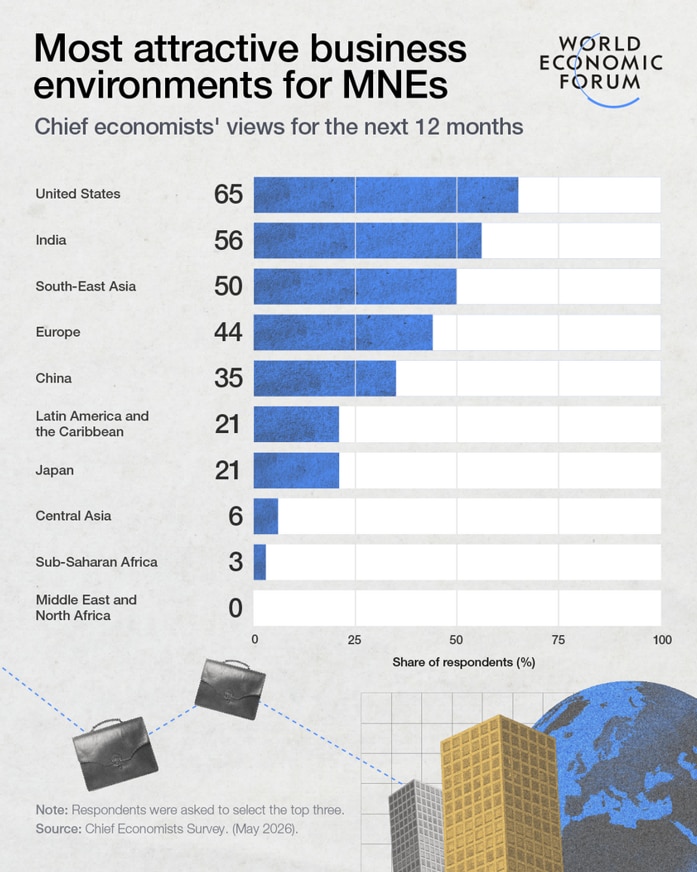
Chief Economists’ Outlook May 2026Image: World Economic Forum
Divide between ‘the stock market and the real economy’
Vinjamuri highlighted the US perspective and mentioned the disparity between what people are experiencing on the ground and the country’s growth trajectory. “It’s not a distributed growth”.
She questioned whether such uneven growth is sustainable.
Dağlıoğlu cited inflation and global debt as major challenges. “Countries who address those challenges have growth potential”, he said.
Economic statecraft is here to stay
As the conversation moved to geopolitics, Bharadwaj warned that economic statecraft is here to stay. Learning how to deal with it is key – especially when it comes to understanding investment flows.
Ling thinks every investor should be very aware of local politics as well as geopolitical tension. “There’s no way to predict it, but there’s a lot you can do to prevent potential red flags”.
“There’s a lot of red flags flying”, he added.
Vinjamuri’s message was, “business is not business is not business”.
She explained that business is not just on the receiving end of geopilitical disruption, but is rather a powerful actor. “They have a responsibility to think about what kind of social, political and economic environment they want. Business has a role to play in shaping the decisions that political leaders make”, she said.
“They have a huge amount of social responsibility, too. I can imagine a future where there’s a new social demand from the large companies and a new kind of political leadership.”
Watch the session here.
Have you read?
APEC, ASEAN and the Art of Alignment
Asia-Pacific drives a huge share of global growth, and two regional architectures — APEC and ASEAN — could amplify each other if they coordinated more closely.
What is it going to take to strengthen that collaboration?
Bain & Company’s Asia Pacific Chairman Satish Shankar joins the Council of Palm Oil Producing Countries Secretary General Izzana Salleh, APEC Secretariat Executive Director Eduardo Navarro Pedrosa and Minister of Digital Economy and Society of Thailand Chaichanok Chidchob to discuss.
Watch here.
‘Students don’t want busy work. There’s got to be friction if they’re going to learn’
We have more access to knowledge than at any point in history, yet literacy and numeracy are falling in many economies. So what needs to change?
Opening this session ‘More Content, Less Learning’, Rahul Attuluri Co-Founder and Chief Executive Officer, NxtWave, discussed the importance of creating ecosystems that ensure students engage with information, not just listen to or watch it.
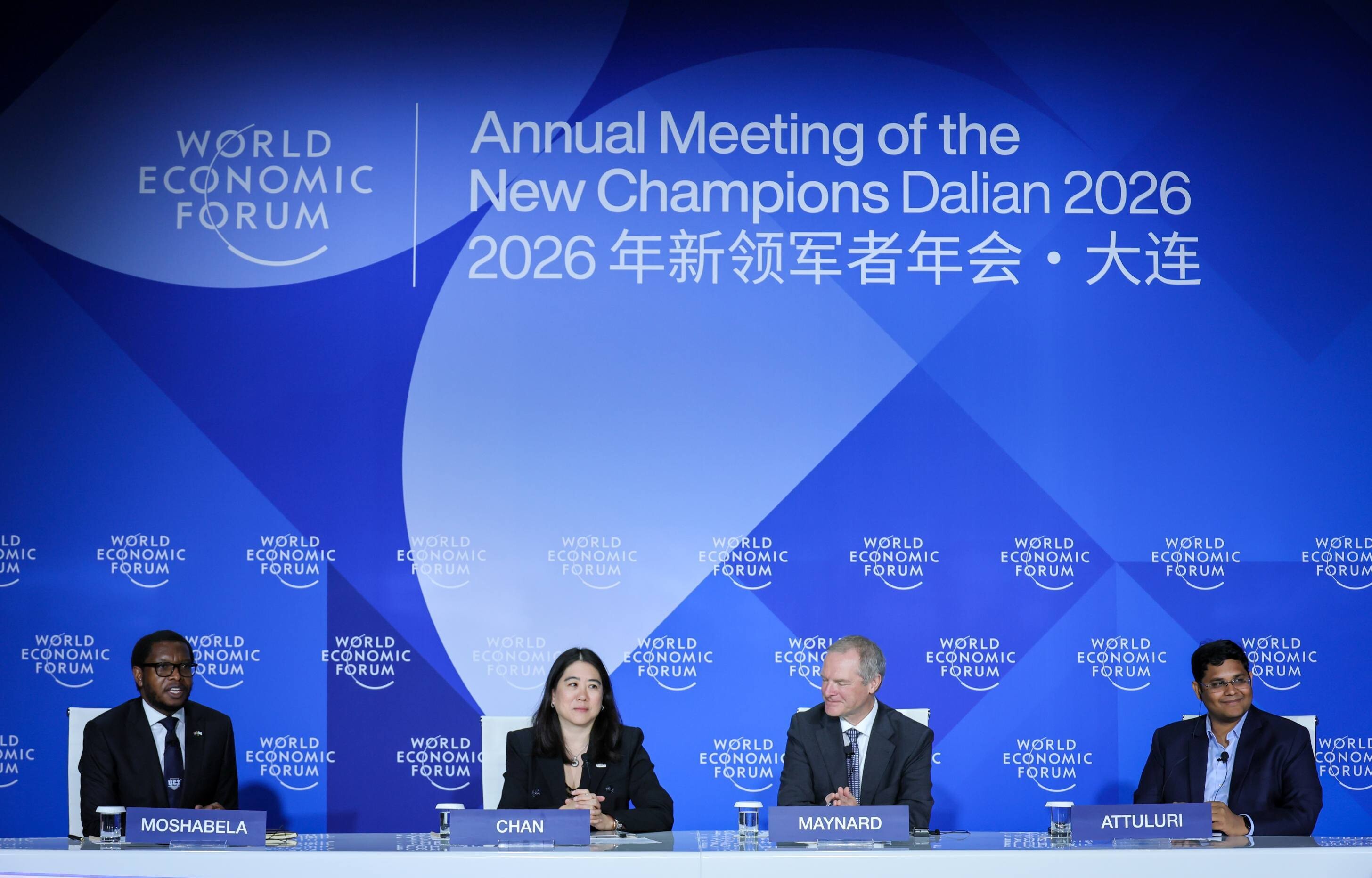
Image: World Economic Forum
“They don’t want busy work,” added Andrew D. Maynard, Professor, School for the Future of Innovation in Society, Arizona State University. “They recognize that they’ve got a push against something, there’s got to be friction if they’re going to learn.”
Vanessa Chan Inaugural Vice-Dean Innovation & Entrepreneurship, University of Pennsylvania said that creativity is what really matters, and students often experience learning environments that focus too much on grades, rather than how they can apply their abilities in the real world.
“Students are going to be going deep in content, but the question is, are they actually interacting with the physical world looking for problems,” she explained. “If we can graduate engineers who are looking at the outside world and questioning it, then applying the technology and the knowledge to solve those problems, that’s when we can have real impact.”
Closing the session, Attuluri reflected on how technology can unleash human potential.
“The world has gotten infinite problems, and if AI is so powerful, let students spend their time solving the problems and making the world a better place.”
Watch the session here.
Where climate capital is going
In recent years, investment in clean energy has surpassed investments in fossil fuel supply, signalling a shift in how markets respond to climate risk.
With capital flowing into renewables, electrification and industrial decarbonization, what will determine whether it delivers a credible climate response?
In this session “Follow the Money: Where Climate Capital is Going”, Guan Xin, Anchor and Chief Business News Editor, China Global Television Network (CGTN), was joined by Liu Zhenmin, China’s Special Envoy for Climate Change, Sumant Sinha, Chair and Chief Executive Officer, ReNew; Zhong Baoshen, Chairman, Longi Green Energy Technology Co. and Lina Noureddin, President and Founder, Lamar Holding.
Liu Zhenmin reflected on the mixed progress towards meeting the goals of the Paris Agreement, including the impact on investment from conflicts, COVID-19 and the US withdrawal from the agreement. But he says we should be proud that the energy transition is now a global trend.
To maintain momentum, he said we need to convince the business community that there is great potential in investing in the energy sector.
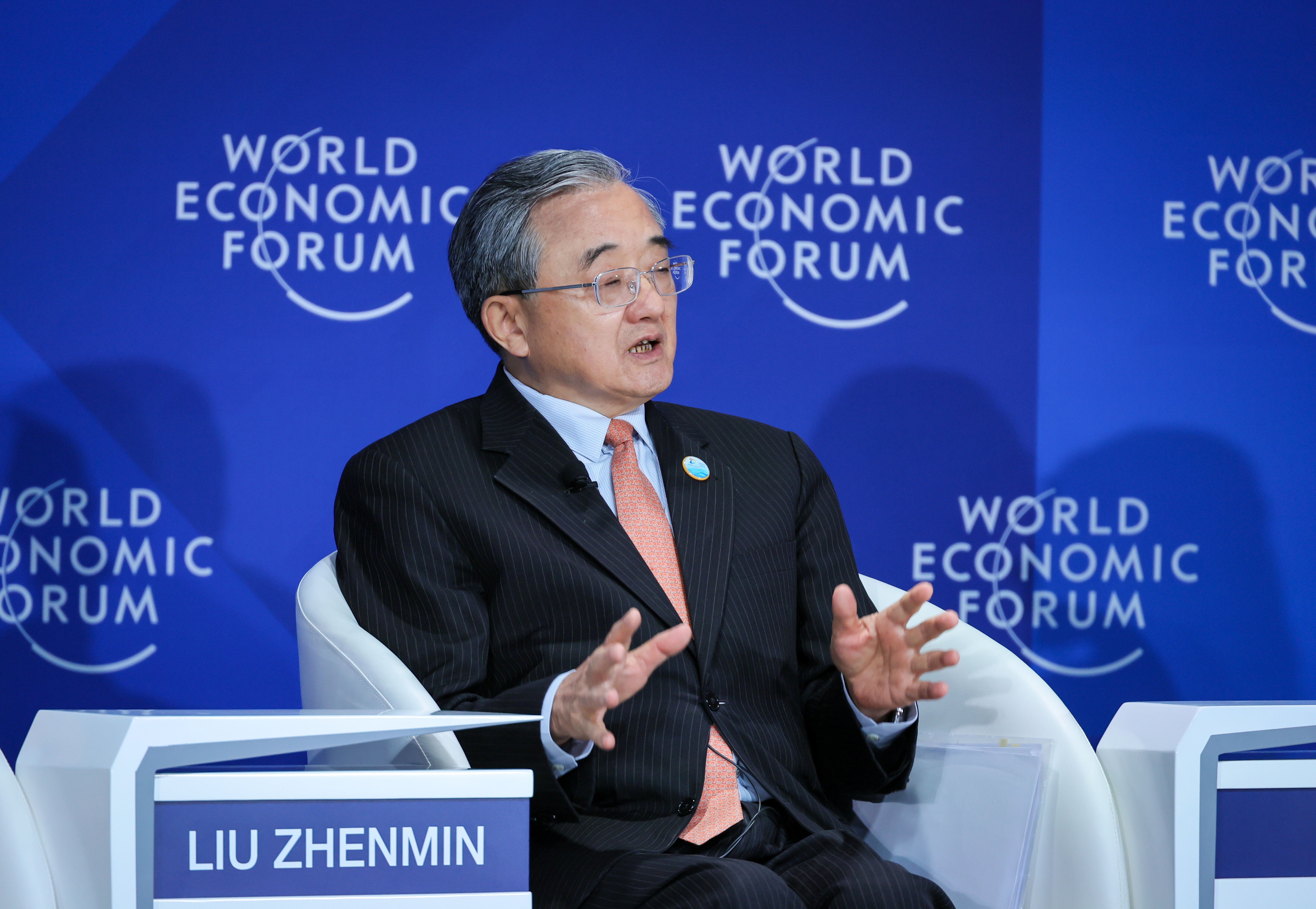
Image: World Economic Forum
Sumant Sinha agreed that there’s been “substantial progress”, spurred by the COP28 decision to phase out fossil fuels.
“We’ve now got to a point where clean energy in most geographies and most large countries and economic blocs in the world has at least crossed 15 to 20% of total electricity generation.”
New energy from renewable energy sources has also become the cheapest, compared to pure generation from fossil fuel alternatives in most geographies.
But we are now facing constraints, including grid management, and storage has become important. “Grid build-out has to happen much faster. The easily available land in most geographies is getting exhausted, so we now have to start thinking about a little bit more innovatively about land access.”
The conflict in the Middle East has accelerated the transition, as countries now realize energy security can be met “very substantially through clean energy which is generated within your own borders”. Now, policymaking must speed up, along with diversification of supply chains.
He said capital will flow to areas where they can get good returns. “So it’s really incumbent upon the corporate sector working with governments to make sure that there are appropriate returns that can be provided in projects that are now being done in any geography.”
India has scaled clean energy installations in the past few years from 18GW to 50GW in 2025.
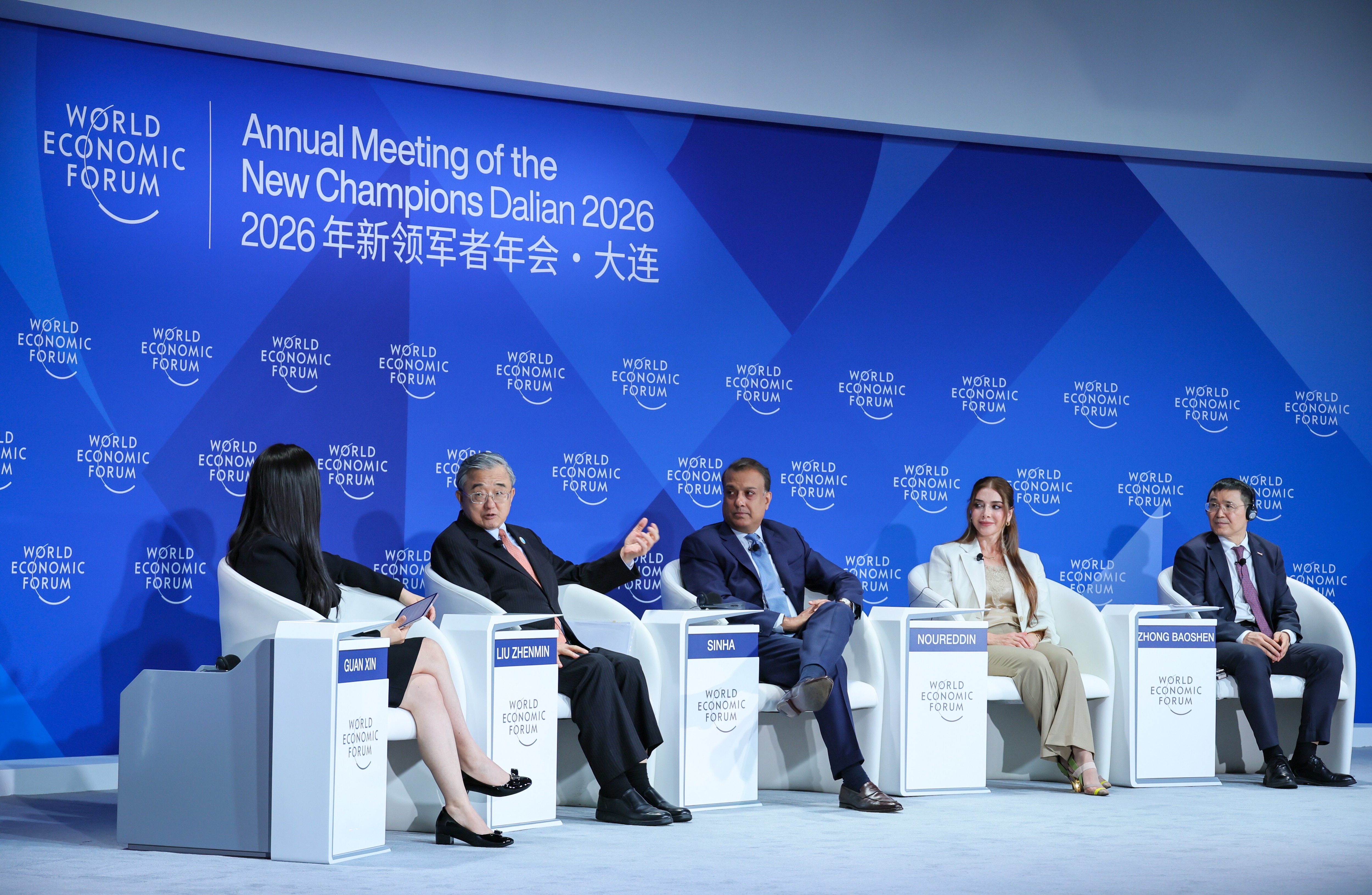
Saudi Arabia has doubled renewable investment from year to year, said Lina Noureddin, with solar powering new data centre projects.
Solar power generation in China has reduced in cost by 90% in the past 15 years, said Zhong Baoshen. Despite “the voice” on dealing with climate change getting weaker, we still see that renewable energy is developing.
Longi is looking at the integration of solar and storage to scale up renewable energy, reducing the cost and make the usage more flexible.
We must accelerate national actions or we run the risk of not achieving the Paris goals, said Liu Zhenmin. The benefits of the energy transition are uneven, and we must help all countries. In Africa and some parts of the Asia there are still around 600 million people without access to electricity. We must urge developed countries and multilateral development banks to honour their commitments to support developing countries.
Energy: What did we get for $3.3 trillion?
Not as much as we need, apparently.
The Forum’s Energy Transition Index turned 16 this year, and the headline is that progress is fragmenting. That comes despite a record $3.3 trillion in energy investment.
Head of the Forum’s Centre for Energy and Materials Roberto Bocca, Accenture’s Gavin McKenzie, Minyang Smart Energy Chairman Zhang Chuanwei, and Dean of the Fletcher School at Tufts University Kelly Sims Gallagher delved into this year’s findings, which were inevitably shaped by friction in the Strait of Hormuz.
Kelly Sims Gallagher said the extreme levels of policy unpredictability in some places have created unnecessary challenges.
“It’s very tempting in situations like that to blame one political party or another,” she said, but in fact the failure should be attributed to policies that aren’t sufficiently appealing.
“We need to find solutions that are really broadly supported by the public.”
China is an example of a place with “very credible and stable policies that don’t waver,” she added. But there’s a “but”: emissions remain high, due mainly to a lingering heavy reliance on coal.
Watch the full session here.
Essential reading on China’s 15th 5-Year Plan
China’s 15th Five-Year Plan, which outlines the government’s main economic and social development priorities for the coming years, is a major topic of discussion at Summer Davos.
To better understand the plan and its global implications, explore the Forum Stories series of analysis articles below.
Have you read?
-
What does China’s new 5-Year Plan mean for global trade and investment?
-
Why China’s next success story may be healthcare
-
Can systemic green transitions unlock a new generation of competitiveness under China’s 15th Five-Year Plan?
-
How green trade is becoming the next engine of resilient growth for China
-
Will China’s innovation systems drive the next growth cycle?
-
Why China is evolving from building assets to investing in people
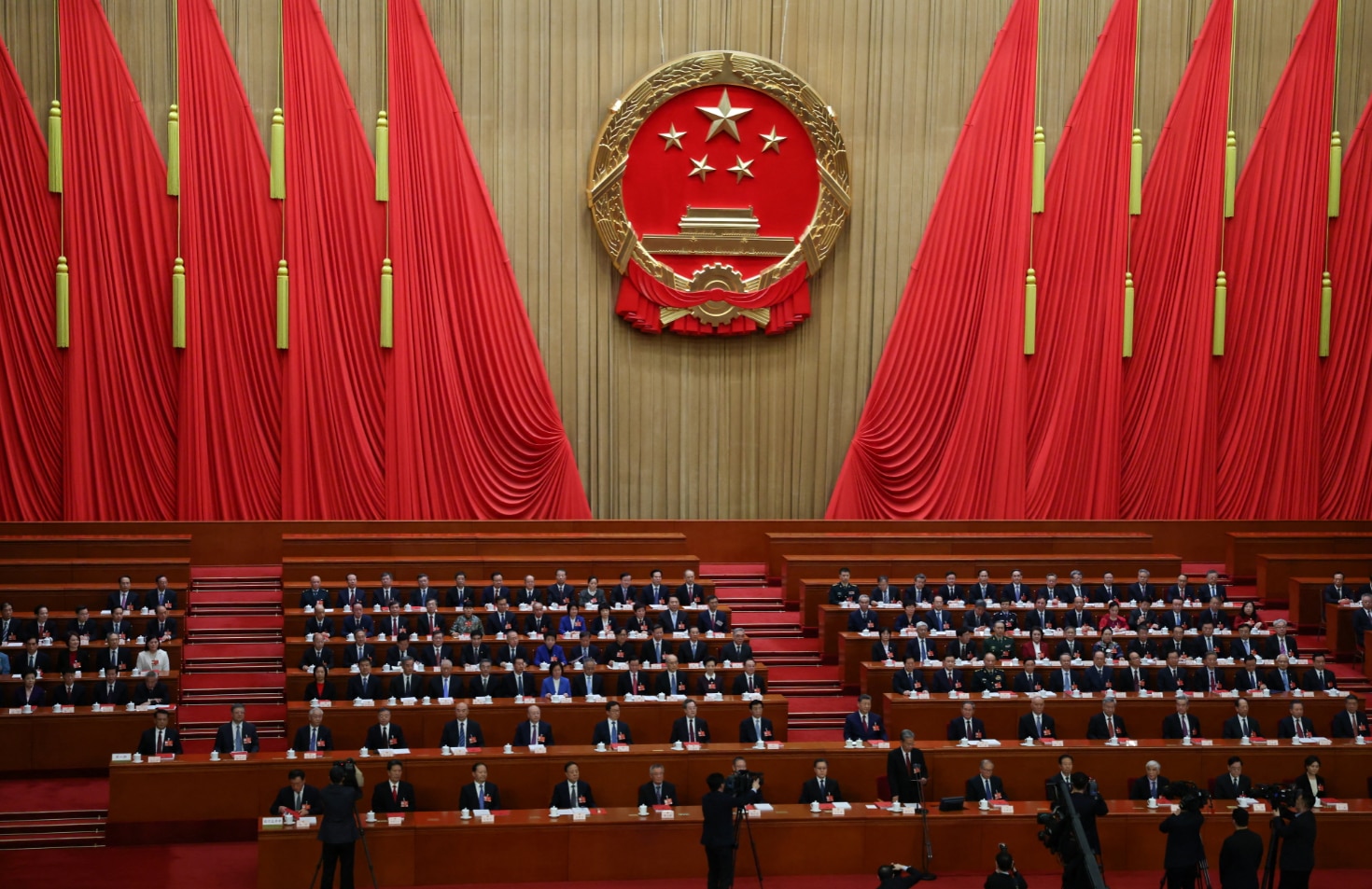
China’s 15th Five-Year Plan was released during the National People’s Congress in March.Image: Reuters
The transition of industrial clusters: ‘The growth opportunity of the century’
China is putting industrial clusters at the heart of its industrial and green transition, using them as testbeds for integrated solutions – from scaling clean power and new technologies to shaping policy and markets.
How are these clusters driving transformation in China, and what can the rest of the world learn?
In the session ‘The Latest on Industrial Clusters’, Dalian New Media Group’s Ren Wenxun, joined Mercedes Maroto-Valer, Director and Champion, UK Industrial Decarbonisation Research and Innovation Centre (IDRIC); Liu Wei, Vice-President, China Southern Power Grid; the Forum’s Roberto Bocca, Head, Centre for Energy and Materials; Member of the Executive Committee, and Leng Xuefeng, Secretary of Working Committee of Jinpu New Area; Member of Standing Committee, CPC Dalian Municipal Committee.
Leng Xuefeng said the Jinpu New Area industrial cluster, one of the case studies in the Forum’s white paper Inside China’s Industrial Transformation, saw economic growth of 6.2% in 2025 and slashed carbon emissions by 11%.
They partner with universities and research institutions and are now focusing on applications, including hydrogen fuel cells in public transport, such as the buses in Dalian.
We are moving into a world of a growing demand, said Mercedes Maroto-Valer. “Within that growing demand, it’s not only about reducing emissions, but it’s really how we’re going to make sure that these new green products are more sustainable and actually also able to reach all the standards of living.”
She warned that were “no perfect solutions” and that there would be trade-offs, but said despite those, we need to stay focused on the long-term opportunities and sustainability.
”
— Mercedes Maroto-Valer, Director and Champion, UK Industrial Decarbonisation Research and Innovation Centre (IDRIC)
Roberto Bocca said the Forum is seeing the convergence of multi-industries, which will help to speed the energy transition.
“We will not find a solution to industrial and energy transformation just in one company or in one industry. It is really the cross industry, the cross-sectorial and co-location of those that will help.”
On the matter of scaling, Maroto-Valer explained some of the bottlenecks – such as how tech tends to run ahead of policy and business models. But, she says, that’s where solution lies. In the UK, they operate a whole systems model where the technologies are co-developed alongside policy, the regulatory frameworks, and the business models to enable implementation at a much larger pace and scale.
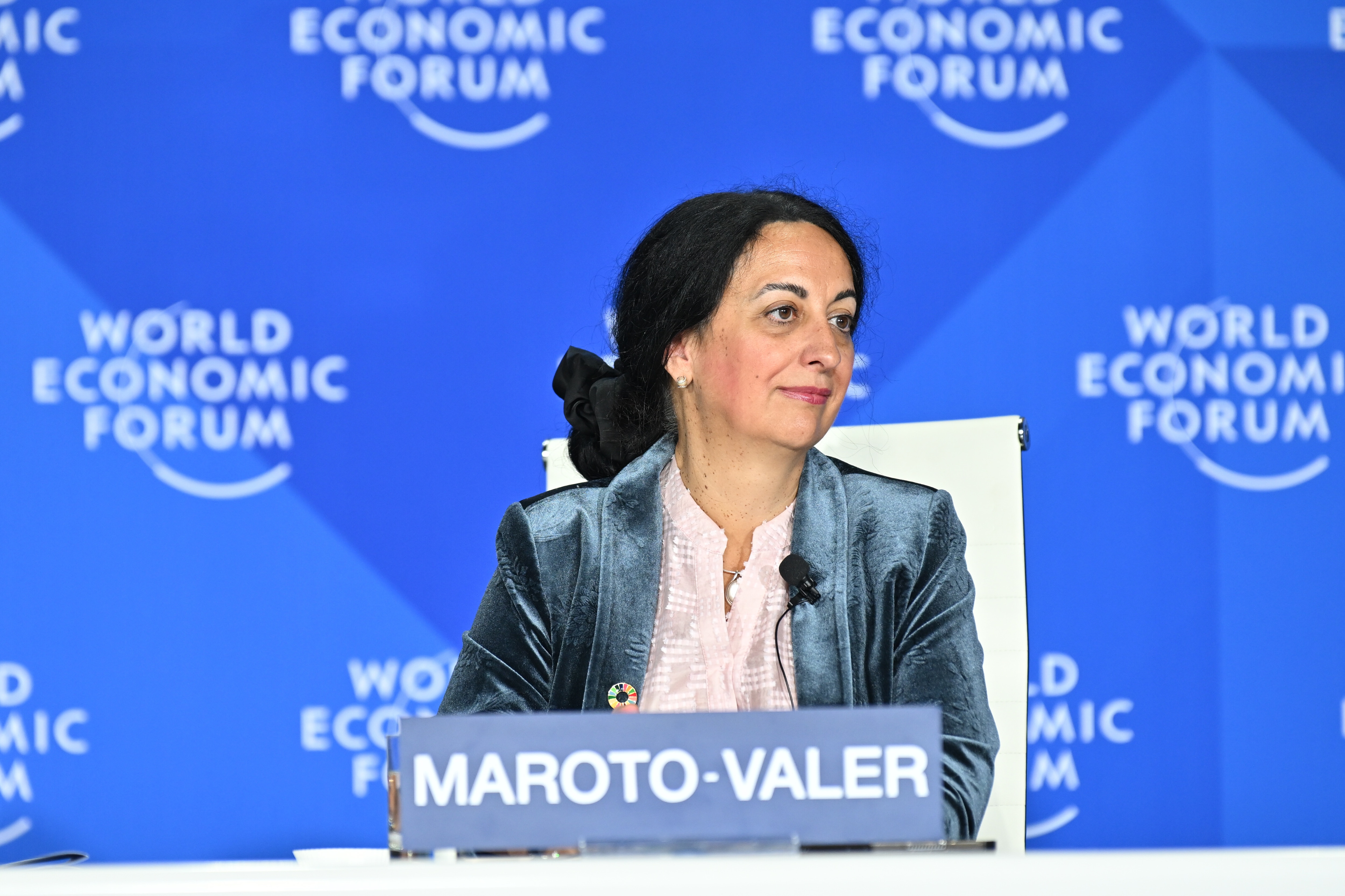
Image: World Economic Forum
“Clusters offer you the perfect ecosystem to operate a full systems model. It’s about how we co-create together the conditions that will allow us to flourish and do this at a global scale so there is prosperity for all.”
Liu Wei explained the investments that the China Southern Power Grid (CSG) has been making into renewable energy to power industrial clusters with green power. The utilization rate of renewable energy has exceeded 198%, and that has replaced 2240 billion kilowatt hours of traditional energy supply.
Watch here.
How far can China’s innovation model go?
China’s role in sectors ranging from consumer technology to manufacturing automation is being shaped by industrial policy, market scale and a dynamic technology ecosystem. And for many companies, moving quickly from prototype to production and tapping dense supplier networks can provide a significant advantage.
Today, however, economic models are changing. So where does China’s innovation model remain strongest — and where are constraints felt?
In this session, “How Far Can China’s Innovation Model Go?”, panellists explored these questions and examined new avenues for growth and innovation.
Ya-Qin Zhang, Chair Professor and Dean of the Institute for AI Industry Research at Tsinghua University, noted that scale, efficiency and integration have been the successful pillars of China’s innovation model. “It’s the integration of universities, industries and industrial policies,” he said, citing the example of electrical grids helping to spur advancements in AI.
Yet panellists stressed the importance of continuously reassessing the model to ensure continued growth and prosperity. “We always have to question the current model,” Eric Tse S Y, Chief Executive Officer of SBP Group, said with regard to pharmaceutical research.
Carlson Tong, Chairman of the Hong Kong Exchanges and Clearing (HKEX), noted that capital constraints are one limitation to the innovation model that needs to be addressed. “You need more than to innovate,” he said. “You need to be able to go to market.”
China has “all the right conditions to drive innovation and scale because of its many years of manufacturing experience. What it needs is capital flow,” Tong added.
Feng Xingya, Chairman of Guangzhou Automobile Group, stated that another constraint is the barrier of entry for new firms. Feng explained that while China’s auto industry has benefited from the country’s “long and complete industrial chain,” the system does make it difficult for new companies to grow and spur competition.
Watch the full session here.
Have you read?

Chinese Premier Li Qiang takes the stage
Li Qiang, Premier of the People’s Republic of China, took centre stage at Summer Davos, delivering a special address during the opening plenary that stressed the importance of innovation in the global economy and detailed China’s paths of economic growth.
“I believe innovation that truly transforms and benefits the world must always open up to and embrace the world,” Li said. “In this new landscape, only through stronger cooperation can we generate more breakthroughs and only through stronger cooperation can we rise to the diverse risks and challenges before us.”
”
— Li Qiang, Premier of the People’s Republic of China
Li also detailed China’s rise as a “hub of rapidly emerging new technologies, new products and new business models,” citing the recent launches of several commercial rockets and the significant growth in country’s AI sector, among other achievements.
In the opening plenary, Premier Li was joined by Wang Xinwei, Governor of the People’s Government of Liaoning Province, Alois Zwinggi, President and CEO of the World Economic Forum, and Gim Huay Neo, Managing Director of the World Economic Forum.
Watch the full session here.
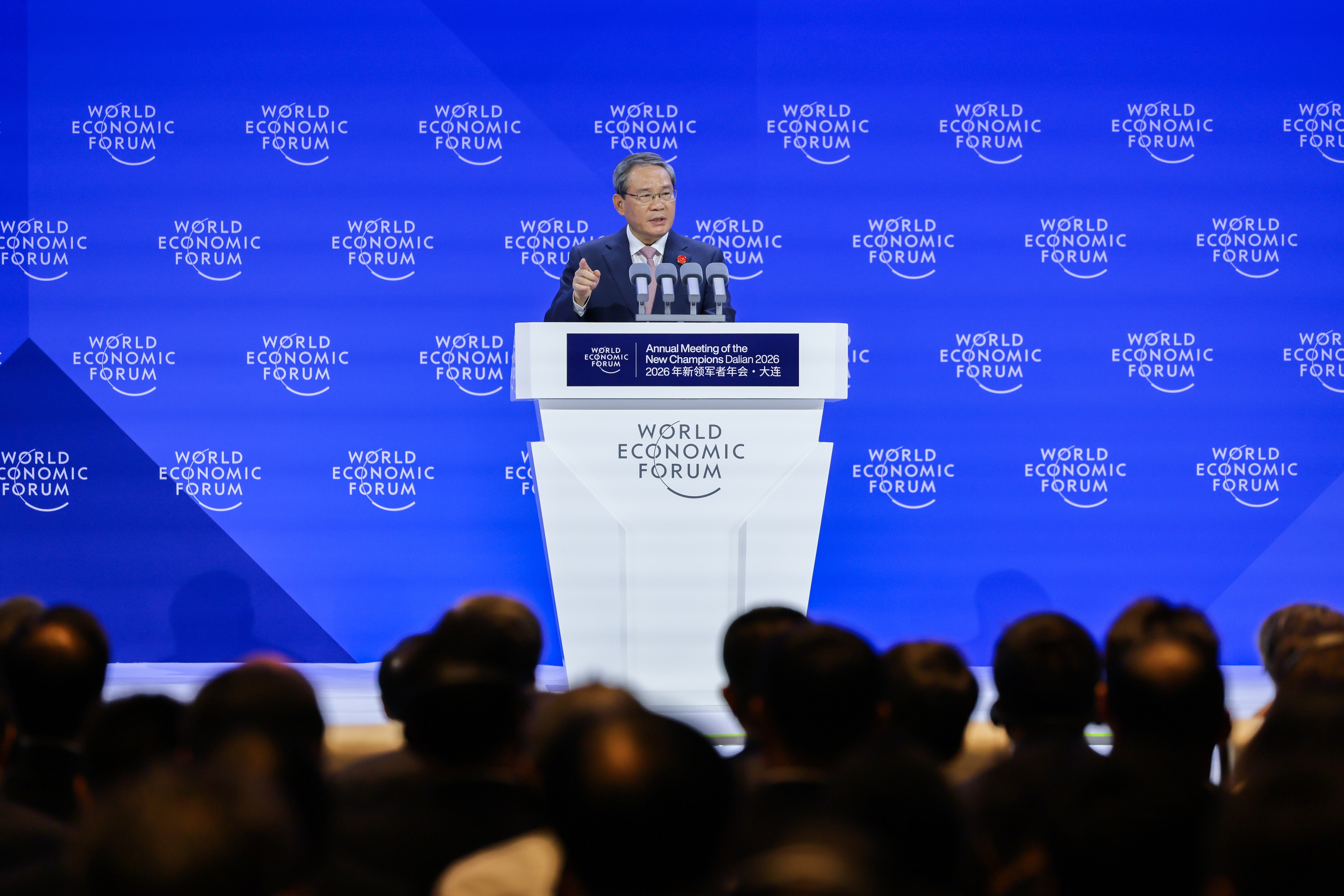
Image: World Economic Forum
Where does the Iran deal go from here?
With a 60-day ceasefire signed on 17 June and negotiations between the US and Iran ongoing, the “Update on Iran” session this morning brought together three analysts to ask what comes next.
Mahmood Sariolghalam of the Middle East Institute talked about how the process of decision-making has changed in Iran, and in particular how economics has become central to the calculus in a way it wasn’t before. “The new perception of the United States is far less ideological,” he said. “Now they are in the same room, not only speaking directly but negotiating — not just on the nuclear issue, but on a range of issues.”
Decision-making in Iran, he added, had consolidated into a smaller, more pragmatic circle and one that understood, in his words, that “their survival in the near to medium term hinges on economics, not much geopolitics anymore.”
He identified three variables that would determine the outcome: domestic politics in Iran, in Israel ahead of October elections, and in the United States ahead of November’s midterm elections. “Domestic politics in three countries will determine the outcome of this negotiation.”
Jason Bordoff of Columbia University noted reasons for both optimism and caution, pointing to the economic incentives on both sides that gave the current agreement its initial momentum.
Sanam Vakil of Chatham House placed the deal in its regional context. The Gulf states, she said, saw resolution as essential to their own long-term stability. “They worry that a no-deal scenario will result in continued instability and perhaps another round of war.” But the region, she continued, needs to play a role in shaping the outcome of this war without “just outsourcing it to the Trump administration.”
She also pointed to lessons from the 2015 Joint Comprehensive Plan of Action (JCPOA), commonly known as the Iran Nuclear Deal. “What the rest of the world — Europe and the Middle East — really need to do… is not give up on a second or third phase of negotiations.”
This requires a discussion, she emphasised, on non-aggression, on noninterference, and a broader discussion on regional security.
Why inflation hurts (in so many ways)
Inflation is very much in the news of late. Why does that likely mean more pain for some people than for others? Who really bears the cost when prices rise?
Bloomberg’s Stacey Vanek Smith, University of New South Wales Professor of International Political Economy Elizabeth Thurbon, Peking University’s Huang Yiping, and Columbia University’s Karen E. Young joined this “Who Pays for Inflation?” panel to discuss how the impacts are distributed, and the political blowback that can result.
“Things changed after February,” said Huang Yiping. He noted that prior to the Iran war and closure of the Strait of Hormuz, inflation was pretty stable in most places and central bankers were thinking about keeping interest rates steady or cutting them.
Karen Young noted that oil prices have slipped lower in the wake of the recent agreement to reopen the Strait, though we’re likely not out of the woods yet. “It will probably happen again,” she said of energy price spikes, due to the still-volatile situation.
While inflation has been rising just about everywhere, it means different things in different places. Elizabeth Thurbon noted that in countries that have invested heavily in renewable energy, the impact of oil and gas price spikes has been more muted.
In China, said Huang Yiping, a little inflation is actually desirable: “We still have to worry about the low inflation problem here.”
Meanwhile in India, said Karen Young, government efforts to ease the pain of higher prices with subsidies will place constraints on public spending likely to be felt in different ways for a long time.
The panellists said price increases fall heaviest on poorer households, and they can easily stir up unrest. Yet, Elizabeth Thurbon said political decision-makers need to be willing to put their own popularity at risk in order to do what’s right for the overall economy.
“The moment calls for bravery,” she said.
Watch the full session here.
Sourcing materials: ‘The basic fundamentals of everything’
Almost everything in a modern economy, from chips and batteries to buildings and medicines, starts with one thing: a material.
Moreover, it is a material that has to be sourced, processed and supplied at scale. So what trends are driving the modernization of materials systems and what risks need to be addressed to meet future needs?
In this session, “Prosperity Is Material(s),” expert panellists examined how materials are being sourced in the global economy and the supply risks that accompany rising demand. Participants, however, began the session by stressing the overall importance of materials.
“The basic fundamentals of everything that we need, not only for our day-to-day lives, but for prosperity and the health of our communities is all based on materials,” said Barinder Rasode, Chief Executive Officer and Co-Founder of Tersa Earth Innovations. “My hope is that we get to a standard where materials are actually the way that we’re building our new world with trust and prosperity.”
Dang Yanbao, Chairman of the Board of Baofeng Group, added that “materials are critical to our development; in particular, for science and technology because the future of scientific advancement depends on materials.”
The panellists examined the various vulnerabilities that continue to pose risks to securing affordable and accessible materials. This includes, for instance, geopolitical shocks to the global economy that fuel and inflation and disrupt supply chains.
“If the geopolitical tension remains, we need to strike a balance between different pathways or roadmaps to ensure availability of raw materials and keep the cost low,” said Zhao Dong, President of China Petrochemical (Sinopec Group). “That will make the whole system more resilient.”
Zhao added that petrochemical supply chains must be diversified and urged companies to “implement new technical solutions to better mitigate the shocks from geopolitical events.”
Rasode also stressed the importance of pursuing advanced technology in material markets, noting that her firm is already using microbial fuel cells in its extracting processes.
“We need to redefine what research and innovation means, and not see it as a cost, and in all ways possible accelerate it,” she added.
Conrad Keijzer, President and CEO of Clariant, echoed the importance of technology, stating that “the bright spot is technology solutions are there; the darker spot is they still come at a price.”
Watch the full session here.
When will deep tech show its promise?
Are we living through a genuine deep tech revolution, or another cycle of technological optimism? That was the opening question for a session developed with the Financial Times that brought together investors, a startup founder and a former central banker.
The panel’s consensus was that the revolution is real, but the capital structures around it haven’t caught up.
Annali Domingo drew the session’s sharpest line early. “AI is not deep tech, and deep tech is not AI.” The conflation, she argued, was causing investors to miss real opportunities in biotech, quantum and advanced materials. On timelines, she cited Robert Solow’s 1987 observation that productivity gains from genuine technological change take 20 to 40 years to materialise.
Jonathan of Bain Capital China put the investor’s dilemma plainly: “Patience has to be built on conviction.” Brandon, co-founder of physical AI startup Archetype, gave the founder’s version: “Get out a shovel”, meaning a moat isn’t declared, it’s built through data, technique and customer relationships that can’t easily be replicated.
Zhu Ming, formerly of the PBOC and IMF, had the simplest prescription: “You have to be on there”, meaning companies that delay their first step into AI lose the compounding advantage of recursive self-improvement before they’ve even started.