



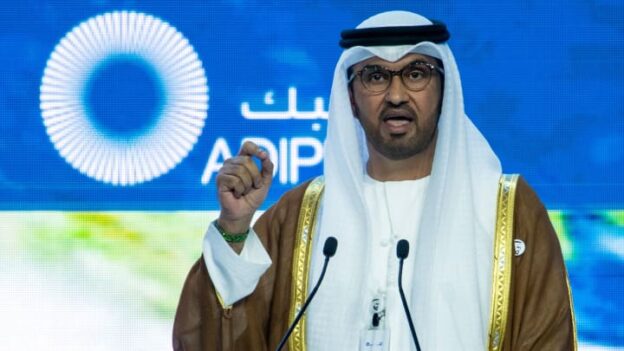
November 29 – This year’s UN climate conference, COP28, has got off to a fractious start. Fears that the event – hosted this year by one of the world’s biggest oil and gas producers – would be hijacked by fossil fuel interests appeared to be confirmed by reports that the UAE, as COP president, is using its position to push oil and gas deals, while Saudi Arabia is said to be trying to lock poor countries into increasing their use of fossil fuels for decades to come.
The news comes as the first Global Stocktake is published, which sets out how countries are performing against the Paris Agreement targets to keep average temperature rises to “well below 2C” and ideally below 1.5 degrees Celsius. The answer, in a nutshell, is not well. Current commitments by countries in their nationally determined contributions (NDCs) put us on track for warming of about 2.4C.
Meanwhile, the consequences of climate change have been starkly illustrated across the world, not just in the Middle East, where November saw floods in Dubai and Jeddah, but across the world, from the Panama Canal, where drought has stopped ships from getting through the waterway, to Pakistan, where huge floods saw a third of the country under water. And 2023 is on course to be the hottest year on record globally in the wake of heatwaves and extreme weather, everywhere from Peru to the Philippines.
Add in the war in Ukraine and the conflict in Gaza, and the backdrop for investors who want to invest in tackling climate change and the energy transition is inauspicious, to say the least, according to a wide range of sustainable finance experts we spoke to on the eve of two weeks of talks in Dubai.
Hortense Bioy, global head of sustainability research at Morningstar, says that some in the financial community are saying that the 1.5C goal should be abandoned. “But we should not give up on it, we should not move the goalposts, because that will lead to back-tracking and procrastination from policymakers. That, in turn, could cause the private sector to delay making the changes they need to make, particularly the highly polluting companies.”
The International Energy Agency says that investment in clean energy needs to rise from $1.2 trillion in 2023 to $4.5 trillion a year by 2030. Institutions want to invest, she adds, but they are being hampered by high inflation and interest rates, which have increased the cost of renewable energy projects.
Nonetheless, Alexandra Mihailescu Cichon, chief commercial officer at RepRisk, believes that despite the challenges facing COP28, “there are reasons to be cautiously optimistic around topics such as renewable energy financing and nature conservation”.
Also in the cautious optimism camp is Chris Dodwell, head of policy and advocacy at Impax Asset Management, and a former UK climate negotiator. “My optimism is partly driven by the fact that over the last few years, the atmosphere of opportunity arising from the transition to net zero is much more present than when I was negotiating,” he points out. “But it is measured optimism because the stocktake says we are off track on almost every metric, and it will be incredibly challenging to increase investment at the scale needed.”
There are a few measures that we know are likely to emerge from the summit, including targets to triple renewable energy capacity and double energy efficiency improvements by 2030, as well as a pledge by the oil and gas sector to end methane emissions by the end of the decade. Read more
These measures are likely to happen because we are well on the way to achieving them already and they are likely to be cost-neutral, or to save money for nations and companies. In the case of tackling methane emissions, recent satellite and digital advances mean that it is much easier to identify leaks, and much harder to avoid responsibility for fixing them.
It is a tribute to how far the world has come since the Paris Agreement was signed in 2015 that these measures are relatively uncontroversial. Adair Turner, chair of the Energy Transitions Commission (ETC), says that “if these things are delivered it would make a significant difference to the pace at which emissions fall.”
But for many investors, the summit will only be truly successful if it includes a target to phase out fossil fuels. “We are clear that there should be a complete phase-out of all unabated fossil fuel use, but this COP should recognise that we can’t just rely on carbon capture and storage (CCS) and that use of fossil fuels needs to fall,” Turner says. “Gas use needs to fall 55% to 70% by 2050, coal consumption by 80% to 90% and oil by 75% to 95%.”
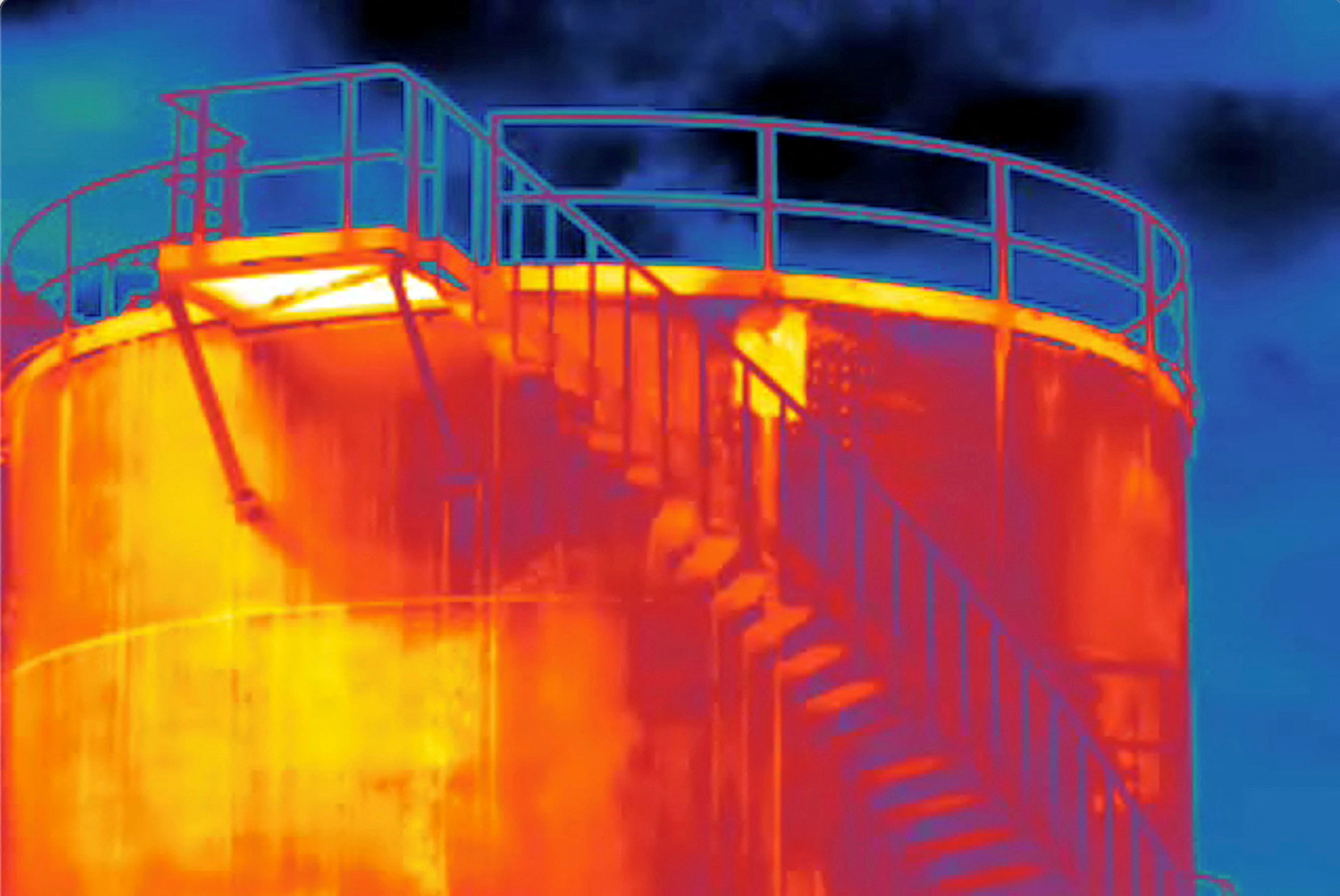
A handout screen grab from thermographic video footage shot with an infrared camera shows what appears to be methane gas leaking from a rusty hole (small yellow rectangular section) on the side of a storage tank at the Eni gas plant near Pineto, Italy. CATF/James Turitto/Handout via Reuters Acquire Licensing Rights
Yet, according to Alix Chosson, lead ESG analyst at Candriam, “it is clear that the fossil fuel sector will take centre-stage in Dubai. We are hearing that the focus could be more on decarbonising the sector (Scope 1 and 2 operational emissions) rather than on its Scope 3 emissions. It is absolutely essential that priority be given to credible alternatives to fossil fuels such as renewable energies and electric mobility, rather than to a highly technological vision that focuses on (carbon) capture and compensation solutions.”
The major fossi- fuel producing countries are still focused on increasing production, adds Dodwell. “That’s a major issue. We need reduction measures both on the demand side and the supply side.”
The renewables and efficiency targets, along with the strong growth of electric vehicle sales, will cut demand significantly, with the Carbon Tracker Initiative warning that demand for oil and gas is expected to peak before the end of the decade. It says from 2023 to 2040 oil and gas revenues could fall from an expected $17 trillion under business-as-usual scenarios to just $9 trillion in a transition consistent with limiting global heating to 1.8C.
Mike Coffin, who heads up oil and gas and mining at the NGO, says that means that “new conventional oil and gas projects developed today may never be profitable, except at the lowest breakeven prices”.
One thing that would help investors would be a mechanism to link pledges in countries’ nationally determined contributions (NDCs) to sectoral roadmaps that show investors where the opportunities of the energy transition lie, says Dodwell. “It would be a way of making the COP process meaningful in terms of national policies. We want to see markets created, investment opportunities identified and details of how barriers to progress will be removed in areas such as planning reforms and grid connections.”
Looking downstream, investors also want to see the companies they invest in shift from commitments to action. “There is a gap between commitment and delivery,” says Francois Faelli, head of global sustainability at Bain. “That needs to change.”

Cars use electric vehicle charging points inside a car park in Manchester, Britain. REUTERS/Phil Noble Acquire Licensing Rights
Yet investors can only do so much to change the behaviour of companies, says Mihailescu Cichon of RepRisk. “Investors can nudge companies in the right direction but cannot transform a business that is by nature high in emissions into a zero-emissions business. Such a transformation requires regulatory intervention and technological advancements.”
Investors would also like to see other barriers to investment eased, says Sean Farrell, chief investment officer of Snowball Impact Management, including upgrading grid capacity and network connections, which have become bogged down in planning processes that can add years to project timelines. “The private sector wants to invest in the energy transition, but there are so many bottlenecks that need to be cleared.”
In the light of the growing impacts that extreme weather events are already having on the global economy, COP28 is likely to have a stronger focus on adaptation than previous COPs, while there will also be an increased emphasis on nature in the wake of the COP15 biodiversity summit in 2022 “as it is now well-understood that tackling climate change and protecting nature go hand-in-hand,” says Mihailescu Cichon. Read more
GFANZ, the Glasgow Financial Alliance for Net Zero, is working on developing guidance on how to incorporate nature into investors’ climate transition plans, while the UN Environment Programme Finance Initiative (UNEP-FI), has published new guidance on setting targets for nature, aimed at helping banks to align with the Kunming-Montreal Global Biodiversity Framework (GBF) and address nature and biodiversity loss.
The obstacles to progress at COP28 are more political than technical, Bioy at Morningstar says. “We already know what we need to do: deploy green technologies and phase out fossil fuels. And we know that the costs of inaction are higher than the cost of acting now.”
And it may be that the combination of the stocktake and the furore over oil producers’ efforts to hinder the transition will actually speed it up instead. “The stocktake tells us that more policies to invest in alternatives to fossil fuels are inevitable,” says Dodwell, while former UN climate chief Christiana Figueres says the recent revelations are the UAE’s Volkswagen’s Dieselgate moment.
Writing on X, she says: “Caught red-handed, the COP Presidency has no other option but to now unequivocally step up the transparency, responsibility and accountability with which they lead the process. This COP Presidency will be under public scrutiny like no other ever before. This is a deep challenge and a transformational opportunity for them. The planet cannot afford for them to not step up.”
Who knows? Maybe they will.
https://www.reuters.com/sustainability/sustainable-finance-reporting/esg-watch-investors-cautiously-optimistic-cop28-despite-fossil-fuel-furore-2023-11-29/