



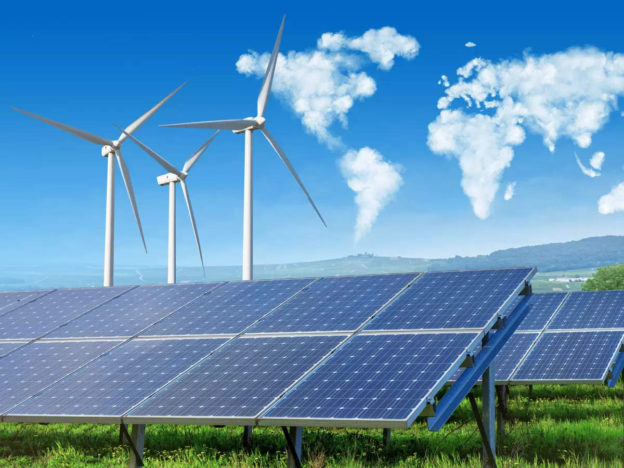
The leaders of the world’s top seven rich countries have agreed to speed up the energy transition by setting more ambitious targets for wind and solar power.
The G7 leaders also agreed to accelerate the phaseout of fossil fuels although they stopped short of setting a deadline for the phaseout of coal, Reuters reported.
“In the midst of an unprecedented energy crisis, it’s important to come up with measures to tackle climate change and promote energy security at the same time,” Japan’s minister of industry said, as quoted by Reuters.
“The United States and all the developed world has the responsibility to help the developing world through this crisis,” U.S. climate envoy John Kerry told the AP.
“Those countries will really determine what happens. If they will reduce, if they will take the lead, if they will start deploying the new technologies, if they will stop using unabated fossil fuels, we’ll up the chance of winning this battle.”
The main commitments of the G7 were a boost of offshore wind energy generation capacity by 150 gigawatts and a similar boost to solar capacity, to over 1 terawatt.
While all G7 members were firm on the issue of a coal phaseout, they appeared unable to agree on a single deadline for that. Canada and several other G7 members committed to a coal phaseout by 2030 but others refrained from making such a commitment.
“Others are still trying to figure out how they could get there within their relevant timeframe,” Canadian resource minister Jonathan Wilkinson said.
Opinions differ on other fossil fuels as well. Japan, for one, is almost entirely dependent on fossil fuel imports to satisfy its energy needs and fossil fuels. Because of that, the country has insisted that LNG is accepted as a transition fuel for at least 10 or 15 years.
By Irina Slav for Oilprice.com
https://oilprice.com/Latest-Energy-News/World-News/G7-Attempts-To-Accelerate-The-Energy-Transition-With-Big-Solar-And-Wind-Promises.amp.html