



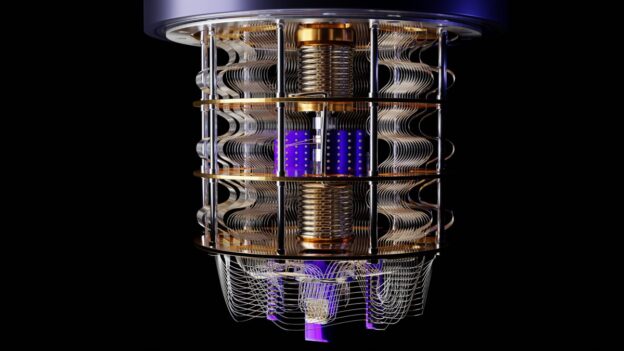
- Recent breakthroughs in quantum mechanics, highlighted by the Nobel Prize in Physics, are fundamentally changing the energy sector by enabling new forms of energy harvesting that surpass thermodynamic limits and creating super-efficient electronics.
- Quantum batteries are being developed to charge significantly faster and potentially emit more energy than they store, leveraging quantum states to store energy in photons.
- Quantum computing is emerging as a potential solution for the energy demands of artificial intelligence and the ecological footprint of Bitcoin mining, offering a more efficient approach than current supercomputers.
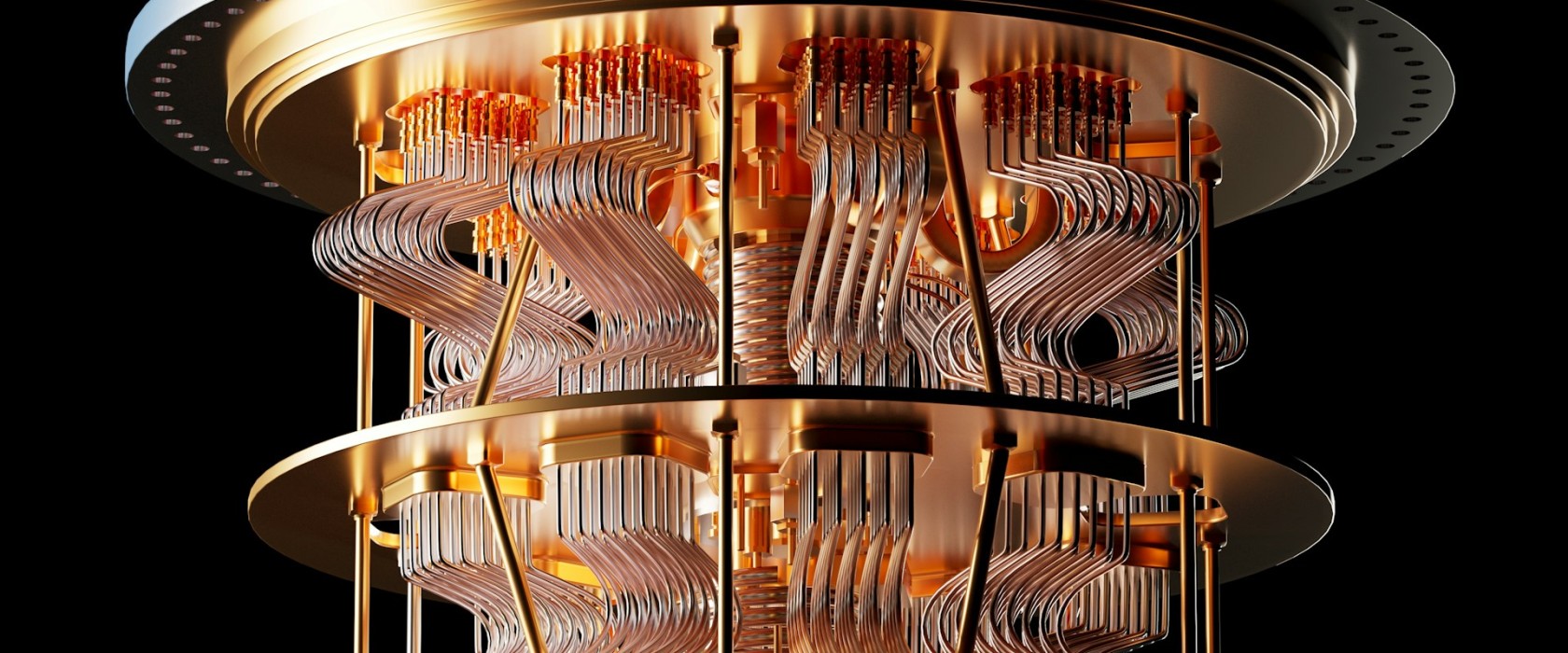
This week, the Nobel Prize in Physics, the most prestigious award of its kind, was given for breakthrough work on quantum mechanics, emphasizing just how critical the field has become in building our understanding of the world around us, and how we can harness that understanding to design a smarter and more sustainable future. Quantum mechanics have already fundamentally changed the way we live, enabling the advent of cellphones, cameras, and fiber optic cables. And they will continue to change the world in ways that we haven’t even dreamed up yet – and some ways that we have.
As the field of quantum physics becomes more sophisticated and scientists get an increasingly better handle on quantum mechanics, researchers are discovering more and more ways to optimize and reimagine the energy sector. Not only can quantum computing vastly increase efficiency for energy-hungry sectors like artificial intelligence, quantum physics can unlock all kinds of energy production and storage processes that were once far outside the realm of possibility.
One of the most recent breakthroughs of this type is a novel form of energy harvester dreamt up by a research team at the Institute of Science Tokyo. An energy harvester is a form of technology that captures energy from the surrounding environment and converts it into usable electricity. Such a device would be able to reclaim energy lost to the heat that emanates from electronics and industrial machinery. It could even be scaled up to reclaim heat from full-scale systems such as power plants and factories.
While the idea of harvesting waste heat isn’t new, its efficiency has also faced critical limitations thanks to laws of thermodynamics. But the team of scientists at the Institute of Science Tokyo have discovered a way to sidestep those accepted thermodynamic limits through the use of quantum states that do not undergo typical thermalization processes.
“This means that when heat is introduced, the system holds onto its non-thermal, high-energy state rather than spreading the energy out evenly, as happens in a conventional thermal system,” reports SciTech Daily. “This advancement could lead to more energy-efficient electronics and future progress in quantum computing,” the report goes on to say.
This is just the latest in a string of breakthroughs for more energy-efficient electronics thanks to quantum physics. Researchers at MIT recently announced that they have discovered a method to observe a so-called “edge state” of electrons that results in a lack of energy loss, known as the quantum Hall effect, with enormous disruptive potential for the tech sector. According to reporting from Interesting Engineering, “such frictionless movement of electrons can enable data and energy transfer across devices without any transmission losses, leading to the development of super-efficient electronic circuits and quantum computers.”
There is also significant movement in the field of quantum batteries, which could harness the power of quantum physics to charge much, much faster than the lithium-ion batteries that currently power our world. Quantum batteries could even harvest energy directly from light sources, since they store energy in the form of photons rather than ions and electrons. Some research even suggests that quantum batteries could, mind-bendingly, emit more energy than they store if they share a quantum state with the device they are providing energy to.
Related: Ukraine Looks to Boost Gas Imports by 30% After Russian Attacks
While quantum physics and quantum mechanics are still emergent fields that scientists are just barely beginning to observe and understand, there is already great hope that harnessing quantum states can solve some of the world’s biggest crises, especially with regard to the energy sector. Scientists are looking into how quantum computing can solve the AI energy crisis and save Bitcoin from its forever-compounding ecological footprint. In theory, quantum computing could be much, much better suited to these processes – solving proof-of-work problems for Bitcoin mining and AI processing – than even the most sophisticated of today’s supercomputers.
“A race is on across industry and academia to fulfill the promise of quantum computing, a strange and powerful technology,” the New York Times wrote this week as part of its report on the 2025 Nobel Prize in Physics. The enormous power of the field can be as frightening as it is exciting. “A true quantum computer could accelerate the progress of drug discovery or other scientific research. It could also break the encryption that protects computers vital to national security.”
The march of progress – both good and bad – is inevitable. Good governance and innovative and ethical policy approaches will therefore be indispensable in making sure that quantum research is applied responsibly.
https://oilprice.com/Energy/Energy-General/How-Quantum-Breakthroughs-Are-Transforming-Clean-Energy.amp.html