



company says collaboration will create ‘new power solutions for future gigawatt-scale data centers ‘
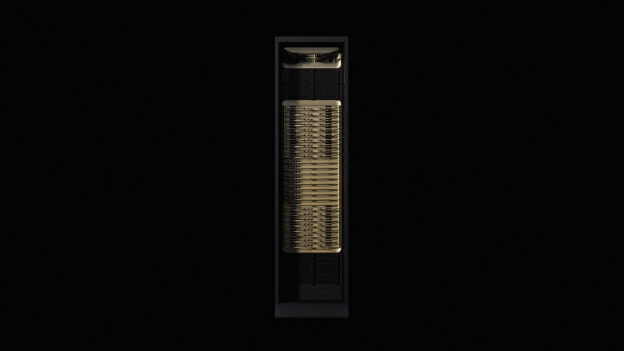
Swedish-Swiss multinational industrial outfit ABB has announced a partnership with Nvidia that will see it support Nvidia’s rollout of 800 VDC power architecture for 1 megawatt server racks. The company says the collaboration will power future gigawatt-scale data centers thanks to its high-efficiency infrastructure.
In case you haven’t dipped your toes in the data center world, moving to 800V DC transmission is quite a big deal, as it allows for significant efficiency improvements, large cost savings in materials needed, and much higher upper limits on per-rack and per-data center power delivery. While the 800 VDC notion isn’t new, having the world’s largest chip designer fully embrace the standard throws substantial weight behind it.

Using a common PC as a basic example, electricity gets to your power supply in 110 V (or 220V) AC form, then gets converted to DC by said power supply to 12 V, 5 V, and 3.3 V. The conversion introduces a certain amount of loss, exacerbated many times over in a data center scenario. A good number of contemporary data center installations use medium voltage 340-480 V three-phase for the main line and across the building, and step down to DC at the PSUs and UPSes.
That’s already more complicated than it needs to be. Even at the increased voltage of a data center, basic physics demands that in order to carry the hundreds of kilowatts that modern server racks can require, it’s necessary to use extremely thick cables along with corresponding connectors and associated gear.
The equipment required for the multiple step-downs is likewise bulky and repeated, so to speak, in multiple steps along the way. All this is quite pricey and demands careful consideration when architecting data center buildings.