



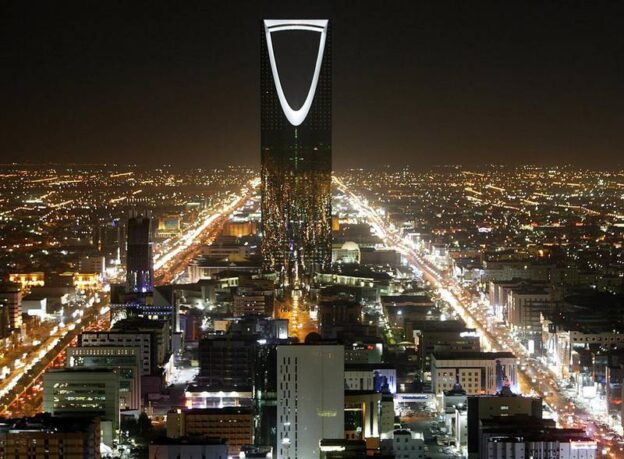
- Saudi Arabia appears to be recalibrating back toward China and Russia after the Iran conflict, with recent high-level meetings focused on expanding energy cooperation.
- The shift reflects a decade-long evolution that began after the 2014-2016 oil price war, when China deepened its influence in Saudi Arabia through investment, energy deals, support for Aramco, and alignment with Crown Prince Mohammed bin Salman’s economic ambitions.
- Riyadh’s confidence in U.S. security guarantees has been shaken by Iranian strikes on key Saudi energy infrastructure during Operation Epic Fury.
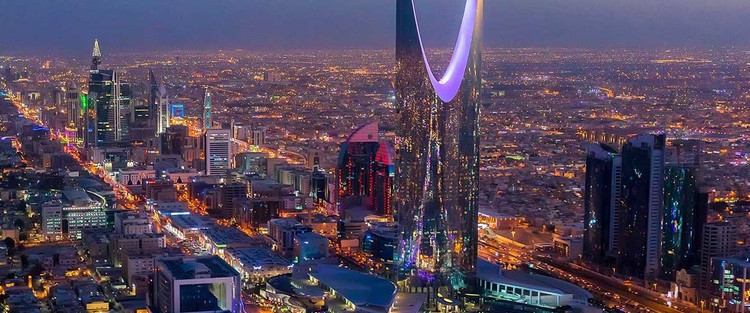
Since the replacement of Russia by China as the primary would-be superpower rival to the U.S., Saudi Arabia has sought to balance its relationships with Beijing and Washington — sometimes leaning more one way, and sometimes the other. Until the 2014-2016 Oil Price War, the U.S. was the core relationship; after the war had finished, it was China and Russia; and then, from the start of U.S. President Donald Trump’s second term in office, it was the U.S. again. However, in the aftermath of Operation Epic Fury against Iran, this looks set to shift once more back to China and Russia, with a series of high-level meetings between Chinese and Saudi Arabian officials taking place last week. One of these — between the deputy head of China’s National Energy Administration, Song Hongkun, and Saudi Aramco’s Downstream President, Mohammed Al Qahtani — focused on boosting global energy security and bilateral oil and gas cooperation between the two sides. So, how has the global oil market arrived at this point, and what happens next?
The genesis of the current position lies in the financial devastation to OPEC countries of the 2014-2016 Oil Price War, fully analysed in my latest book on the new global oil market order. Before the conflict started, there had been a broad and deep relationship between the U.S. and Saudi Arabia based on a landmark agreement between Washington and Riyadh formulated at a meeting on 14 February 1945 between the then-U.S. President Franklin D. Roosevelt and the Saudi King at the time, Abdulaziz Al Saud. The deal was this: the U.S. would receive all the oil supplies it needed for as long as Saudi Arabia had oil in place, in return for which the U.S. would guarantee the security of the ruling House of Saud and, by extension, of Saudi Arabia. This worked well enough to survive the 1973 Oil Crisis, in which Riyadh led an oil embargo alongside its OPEC brothers against the U.S. and its allies for helping Israel in the 1973 Yom Kippur War. However, it did not truly survive the 2014-2016 Oil Price War, as by then the U.S.’s shale oil sector had become a serious global oil-producing force, making the country much better able to withstand lower-for-longer oil prices than Saudi Arabia and its fellow OPEC members. Moreover, Washington regarded this, effectively, as a second oil price war instigated by Saudi Arabia as one breach too many of the fundamental relationship agreement of 1945.Related: Iran Says U.S. Agreed to Unblock $12 Billion in Frozen Funds
Following the financial devastation of 2014-2016 Oil Price War for Saudi Arabia and its OPEC brothers, they had little choice but to admit Russia to the wider ‘OPEC+’ grouping to restore the organisation’s shattered credibility in the global oil markets. China, in turn, was able to leverage the new-found power of its ally into extending its own influence in the Middle East’s leading energy state through a series of wide-ranging agreements made after 2016, and its immediate focus on laying the groundwork for these was a rising star in Riyadh — then-Prince Mohammed bin Salman (MbS). From the first year of the 2014-2016 Oil Price War, Saudi Arabia’s government budget went into deficit — to double digit levels of GDP in the first full year of the war — and it stayed in deficit until the end of 2021. At the same time, MbS was not the natural successor to King Salman, with the heir-designate to King Salman being Prince Muhammad bin Nayef, but the young Prince had an idea that he believed would help him progress — an initial public offering (IPO) of Saudi Arabia’s flagship firm, Aramco.
It was his belief, publicly aired in the second half of 2016, that if Saudi Arabia listed 5% of the firm on international stock markets then it would raise at least US$100 billion for the Kingdom in much-needed funds. This figure would also mean a valuation for Saudi Aramco of US$2 trillion, making it by far the most valuable company ever listed in the world, so restoring some of Saudi Arabia’s damaged reputation in the process. MbS also thought that a listing of Saudi Aramco in multiple major financial centres around the world, including the two most prestigious stock exchanges – the New York Stock Exchange and the London Stock Exchange – would project Saudi Arabia’s presence as an international player in financial markets as a whole and not just in the oil sector. All these reasons looked solid enough on the surface and the senior Saudis agreed to go ahead. However, almost immediately that the process began, questions began to emerge from international investors over the corporate structure of Aramco, the degree to which it would be subject to government control, its valuation, its true oil reserves and spare capacity, and the physical security of its fields, among many others. The upshot was that no serious international investor wanted to become too involved in the IPO and nor did the world’s most prestigious stock markets. That put MbS in a tricky position, as he was the original champion of the idea. However, at precisely that point, China offered to buy the entire 5% of Aramco scheduled to be offered in the IPO. Although the offer was eventually declined, MbS never forgot China’s gesture.
Shortly afterwards, in March 2017, a landmark visit to China by Saudi Arabia’s King Salman took place, during which around US$65 billion of business deals were signed in sectors including oil refining, petrochemicals, light manufacturing and electronics. In August that year, the then-Saudi Vice Minister of Economy and Planning, Mohammed al-Tuwaijri, told a Saudi-China conference in Jeddah that: “We will be very willing to consider funding in renminbi and other Chinese products.” The use of the renminbi was — and remains — a central plank of China’s strategy to subvert one of the key pillars upon which the U.S.’s global dominance is built — the use of the dollar as effectively the global reserve and trade currency, as also detailed in my latest book on the new global oil market order. Al-Tuwaijri’s comments came during the visit of high-ranking politicians and financiers from China to Saudi Arabia in August 2017, during which it was also decided that Saudi Arabia and China would establish a US$20 billion investment fund on a 50:50 basis. According to comments at the time from then-Saudi Energy Minister, Khalid al-Falih, this fund would invest in sectors such as infrastructure, energy, mining and materials, among other areas. In August 2022, at the signing of a multi-pronged deal between Aramco and the China Petroleum & Chemical Corporation (Sinopec), the president of Sinopec, Yu Baocai, said: “The signing of the MoU introduces a new chapter of our partnership in the Kingdom…The two companies will join hands in renewing the vitality and scoring new progress of the Belt and Road Initiative [BRI] and [Saudi Arabia’s] Vision 2030.” Moving into the fourth quarter of 2022, Saudi Arabia reiterated its commitment to China as its “most reliable partner and supplier of crude oil,” along with broader assurances of its ongoing support in several other areas. This was in line with the earlier comments from Aramco chief executive officer, Amin Nasser that: “Ensuring the continuing security of China’s energy needs remains our highest priority – not just for the next five years but for the next 50 and beyond.”
This, and several similar comments around that time, appeared to confirm that Saudi Arabia had come to regard the U.S. as just another one of its partners — particular in the realm of providing security — in a new global order that would see Beijing and its allies share the leadership position with Washington, before attempting to surpass it. This view appears to have re-asserted itself after what Saudi Arabia — and many of its fellow Middle Eastern states — see as a failure by Washington to safeguard their security and economic interests during the war with Iran. Despite having invested hundreds of billions of dollars over the years in U.S.-supplied defence equipment aimed at providing the Kingdom with a security umbrella against attacks, Iran was able to hit key targets in the country, including the East-West Pipeline, the Manifa and Khurais oil Fields, the Ras Tanura Refinery and several other oil, natural gas, refining, and petrochemical sites stretching from the Eastern Province to Yanbu Industrial City. These successful Iranian attacks on Saudi Arabia’s critical energy infrastructure underline to Riyadh that, even on a security basis, the use of the U.S. appears limited. These concerns are heightened by the Kingdom’s broader fears that whatever the U.S.-Iran deal finally turns out to be, it will leave Saudi Arabia in a far more vulnerable position than it was before the war began.
By Simon Watkins for Oilprice.com
https://oilprice.com/Energy/Crude-Oil/Saudi-Arabias-Decided-Who-Its-Future-Superpower-Partner-Is-And-Its-Not-Ameri.amp.html