



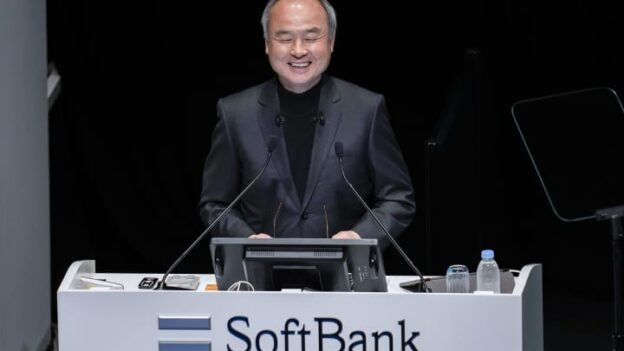
SoftBank said that the demonstration results show that high-performance AI models and GPUs are indispensable for achieving 5G-Advanced and 6G performance
In sum – what to know:
30% boost in 5G throughput – Transformer-based AI improved real-world uplink performance compared to conventional methods, showing stronger results than earlier Convolutional Neural Network-based (CNN) research.
Latency cut below 1 ms – Processing time dropped to 338 microseconds, meeting strict real-time 5G needs while outperforming the CNN model by 26%.
Simulation doubled downlink gains – SRS prediction simulations showed throughput improvements of up to 31% for moving devices, more than doubling results of simpler AI models.
Japanese carrier SoftBank has developed a new AI architecture using a Transformer model for radio access networks (RAN), the telco said in a release.
The telco noted that recent tests showed that the system improved 5G uplink throughput by about 30% and reduced processing delays well below the one-millisecond target for real-time communications.
The research is part of SoftBank’s work on “AI for RAN,” which applies AI to wireless signal processing. The company emphasized that the technology marks a step toward practical use of AI-RAN in live networks.