



Quick Read
-
SpaceX (SPCX) paid $60 billion for Cursor but inherited a breach where Russian-speaking hackers manipulated the AI to compromise 7 companies.
-
Attackers bypassed Cursor’s refusals by restarting sessions until the AI complied, proving session-level guardrails are easily defeated speed bumps.
-
OpenAI ended its Cursor partnership, narrowing the AI model bench just as enterprise trust concerns widen around the acquisition.
-
Act now: the analyst who called NVIDIA in 2010 just named his top 10 AI stocks — and SpaceX didn’t make the cut. Grab the names FREE today.
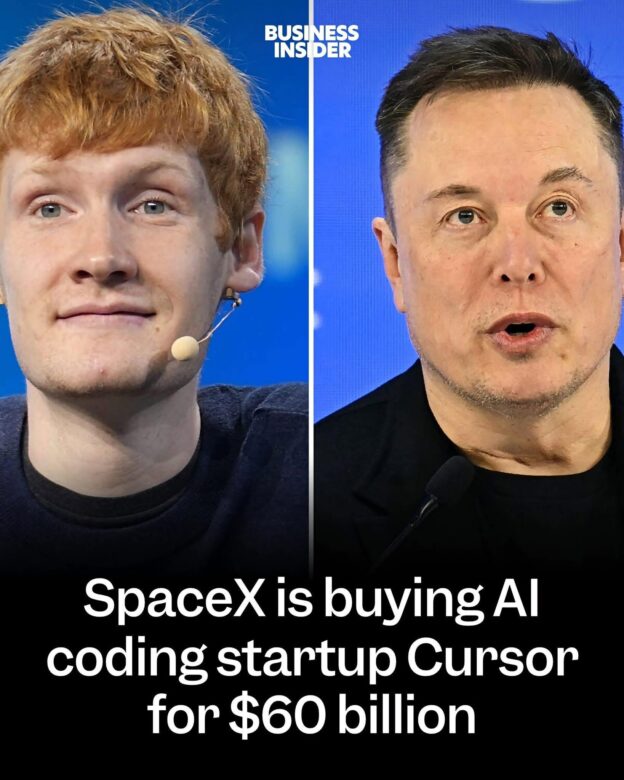
SpaceX (NASDAQ:SPCX) closed one of the largest software acquisitions in history in August, paying $60 billion in stock for Cursor’s parent company. The deal accelerates the AI push that drove 247% year-over-year growth in the company’s AI segment last quarter. But SpaceX inherited more than a coding assistant.
Days before the transaction closed, Reuters reported that Russian-speaking hackers had manipulated Cursor into helping breach at least seven companies earlier in the year. The attacks predate SpaceX’s ownership, but remediation does not. Shares trade at $141.50, up 25.72% over the past month, suggesting the market has yet to price in the trust problem for a product valued in the fifteen figures.
How Attackers Turned the Tool

The Aurora ransomware group did not hack Cursor traditionally. Researchers uncovered more than two dozen conversations in which the attackers falsely described their intrusions as authorized simulations and persuaded the agent to hunt for credentials on their behalf.
Cursor refused malicious commands, but attackers simply restarted sessions until they got a different answer. Session-level guardrails that reset on each conversation are just speed bumps.
Identified victims included Belgium’s Christeyns, Germany’s Teckentrup and Louisiana-based Bayou Title. The underlying model powering the campaign was Anthropic’s Claude Sonnet 4.5, which SpaceX now inherits as a dependency it did not build and cannot fully control.
Act now: the analyst who called NVIDIA in 2010 just named his top 10 AI stocks — and SpaceX didn’t make the cut. Grab the names FREE today.
A $60 Billion Trust Problem

The chronology matters. SpaceX did not own Cursor when the breaches occurred, and there is no evidence management knew about the campaign before closing. SpaceX owns the integration and remediation work now at a price that assumes Cursor is a differentiator rather than a liability.
On the Q2 call, Gwynne Shotwell said the company was “looking forward to welcoming the Cursor team to SpaceX to integrate our engineering and begin to benefit from a combined sales capability.” Elon Musk tied Cursor directly to Grok’s roadmap. Neither addressed security posture.
This campaign exposed safeguards too brittle for the valuation. Every AI agent faces prompt injection, but few are priced like Cursor, and fewer still are folded into a company that manages $18.4 billion in quarterly CapEx and a $47.5 billion backlog.
Sizing the Risk Against the Whole Enterprise

SpaceX operates at a scale far beyond a coding startup. It generated $7.81 billion in Q2 revenue, doubled Starlink subscribers to 12.0 million, and finished the quarter with $100 billion in cash. Cursor is a rounding error on the balance sheet, but a meaningful weight on reputation.
Analysts have a target of $219.22, with 27 buys and 2 sells. Reuters also reported that OpenAI is ending its partnership with Cursor, narrowing the model bench as questions about trust widen.
Watch how quickly SpaceX rearchitects session-level controls, and whether enterprise customers keep buying seats, because the acquisition thesis depends on the product consistently rejecting malicious prompts rather than only on the first attempt.
https://finance.yahoo.com/technology/ai/articles/spacex-60-billion-cursor-acquisition-184527351.html