



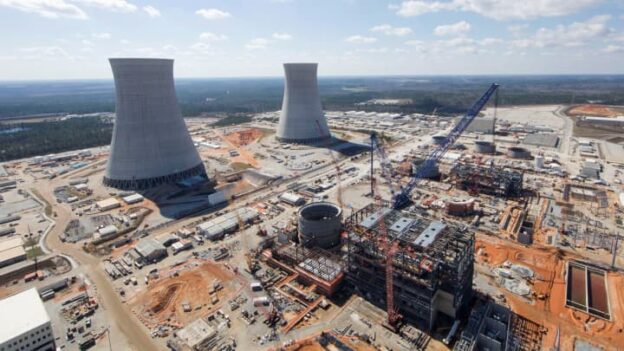
Bitbarn nuke campus to be sited at Idaho National Laboratory
Nuclear-powered datacenters in the US are moving closer as a consortium prepares to build proposed facilities for the Department of Energy (DoE) at the Idaho National Laboratory (INL).
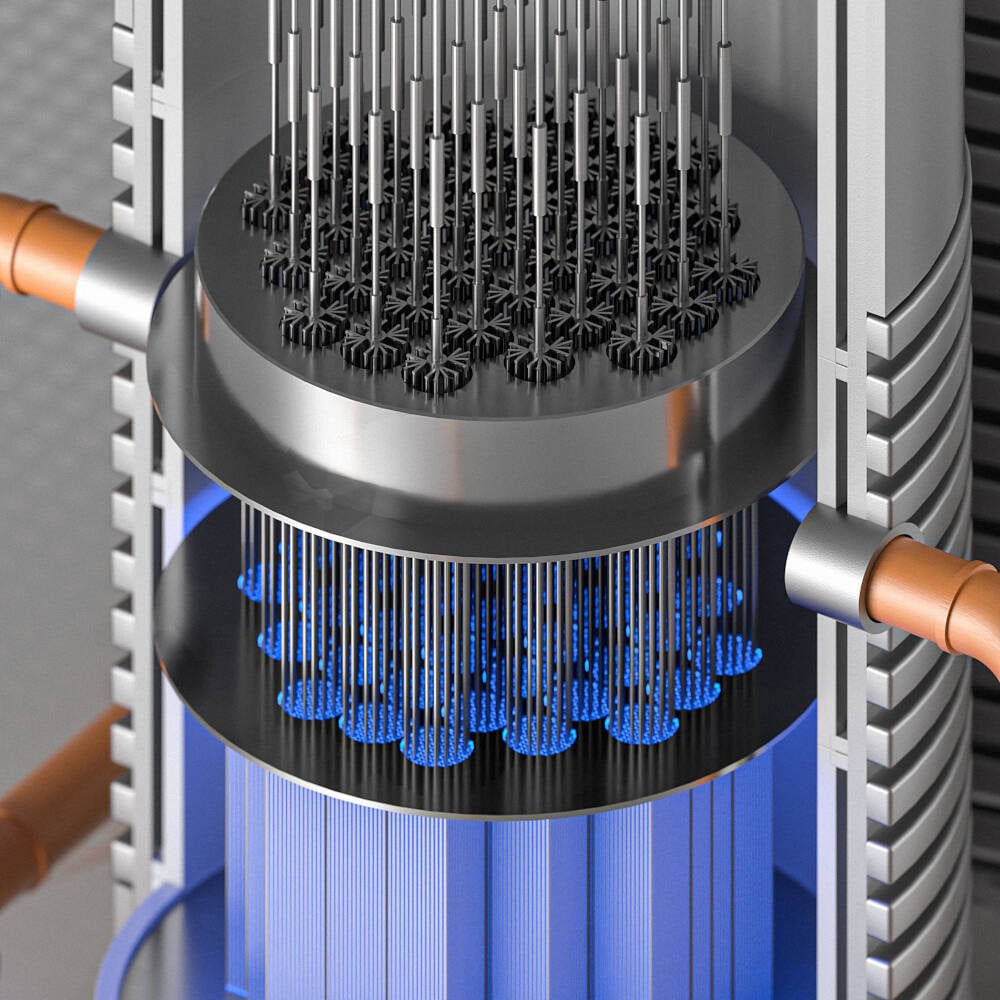
Deep Atomic’s MK60 Small Modular Reactor. The SMR dev says MK60’s “fully integrated” power-and-cooling solution specifically targets the datacenter industry (click to enlarge) – Image: Deep Atomic
At the end of 2025, nuclear developer Deep Atomic submitted its proposal to the DoE to build what it calls the “nation’s first nuclear-powered AI and HPC datacenter campus,” at INL, where commercial nuclear power was pioneered.
While there are already datacenters next to atomic power stations, such as the Cumulus facility in Pennsylvania, now owned by Amazon, the Deep Atomic project aims to build a campus with its own dedicated power plant.
This follows moves by the DoE to colocate datacenters with energy generation facilities on federal land, spurred on by executive orders issued by President Donald Trump about removing barriers to AI development and the energy needed to power it.
The consortium around Deep Atomic includes another nuclear firm, Paragon Energy Solutions, datacenter engineering biz Future-tech, and AI infrastructure firm Moonlite.
Now real estate biz Clayco says that it is providing delivery planning on how the datacenter campus should be designed, engineered, and constructed, to further inform the DoE submission process.
The firm will advise the consortium on aligning design and construction approaches with the operational requirements of running high-density AI workloads.
“Our team is proud to support Deep Atomic and the broader consortium by bringing real-world datacenter delivery experience and execution discipline to help present a buildable, delivery-ready proposal for this groundbreaking, first-of-kind project,” commented Clayco founder and executive chairman Bob Clark.
What’s next?
If the project gets approval, construction is planned to proceed on a phased approach. The datacenter will be completed first, and Deep Atomic hopes operations will commence within 24 to 36 months, using existing grid, geothermal, and solar power already available at the INL site.
The AI compute infrastructure will thus be up and running while Deep Atomic puts its MK60 Small Modular Reactor (SMR) through design certification, fabrication, and commissioning.
Or, as a cynic might put it, the datacenter will still function, even if the SMR turns out to be a dud.
Deep Atomic claims that its MK60 unit will be able to provide 60 MW of behind-the-meter electrical power, but also 60 MW of cooling capacity – a feature designed specifically for AI and HPC datacenters, according to the firm.
We asked Deep Atomic when it expects both the datacenter and atomic plant to be operating, but the answer is likely to be “several years from now.”
- Fukushima’s radioactive hybrid terror pig boom was driven by amorous mothers
- Microsoft touts far-off high-temperature superconducting tech for datacenter efficiency
- Britain courts private cash to fund ‘golden age’ of nuclear-powered AI
- Amazon’s European datacenter buildout blows a breaker as grid connection wait list hits 7 years
“In the nuclear world the game starts very early as there is still a fairly long runway before the realization of SMR or microreactor regulatory approval, availability at scale, and adoption in a broad commercial sense,” Omdia principal analyst for Colocation and DC Building Alan Howard told The Register.
He added that he expected to see the end game of this happening around 2035, but “I hope I’m wrong and it’s sooner.”
Last year, US Energy Secretary Chris Wright expressed his belief that the country would have at least one SMR up and running by July 2026.
A stand-alone nuclear power source serving a stand-alone datacenter with no grid interconnection is “a common vision and likely to come true in the future,” according to Howard, but he said the power delivery market is “evolving and exceedingly complex so how it actually plays out could be quite different.”
“At the end of the day, who knows where we will be on datacenter AI capacity demand in five years; the market is changing quarterly and is so dynamic it’s impossible to get a solid view on the future.” ®
https://www.theregister.com/2026/02/13/us_moving_ahead_with_colocated/