


Israel did not become a global tech hub by following a familiar script. There was no large domestic market to scale into, no abundance of natural resources, and little tolerance for slow experimentation. What emerged is an ecosystem shaped by constraint, speed, and a clear expectation that technology must solve real problems, quickly and at global scale. Israel’s tech hub status is driven by the interaction of policy, culture, talent formation, and institutional design, which together produce outcomes like high startup density, deep tech strength, and major exits.
This context matters. Israel’s technology success is often summarized through statistics, startups per capita, R&D intensity, or headline exits. Those metrics are meaningful, but they are outcomes, not the drivers. The deeper story sits at the intersection of policy, culture, talent formation, and institutional design, all reinforcing one another over decades. Because high tech is so deeply integrated into Israel’s economy, it contributes roughly 20% of GDP, over 50% of exports, and around 12% of total employment.
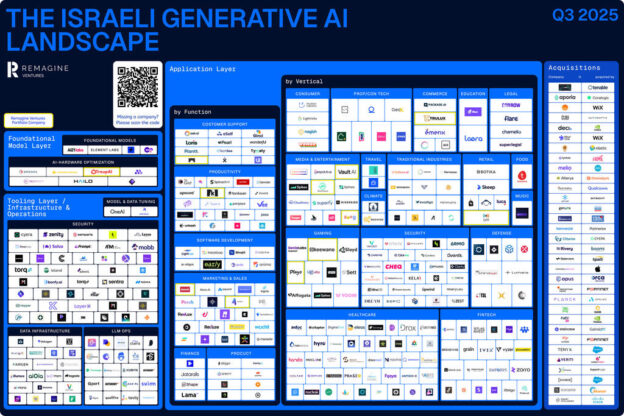
Today, Israeli technology is embedded across global infrastructure. From cybersecurity platforms and AI systems to semiconductors, digital health, energy technologies, and climate solutions, Israeli companies build foundational tools used worldwide. Multinational corporations rely on Israeli R&D for core products, global investors return across market cycles, and startups are designed from day one for international relevance.
Israel’s Global Tech Reputation
Israel’s standing in global technology is the result of long-term structural choices rather than short-term momentum. Its reputation has been shaped by consistent performance across innovation metrics, sustained global demand for its technologies, and the ability of its companies to integrate into international markets at scale.
Israel is consistently recognized as one of the world’s most innovation-dense economies. With more than 7,000 active startups and tech companies, it ranks among the top countries globally for startups per capita and venture capital investment per capita. What differentiates Israel is not just volume, but integration. The ecosystem operates as a tightly connected network where founders, investors, researchers, policymakers, and multinational partners interact constantly. Geographic proximity shortens feedback loops, while cultural norms favor direct communication and rapid decision-making.
Israel’s reputation has also been shaped by its role as a technology supplier rather than a consumer market. Israeli companies often build infrastructure-level solutions that power global industries, embedding the ecosystem deeply into international value chains
What Makes Israel a Leading Technology Hub
Israel’s role as a technology hub rests on a combination of policy incentives, talent pipelines, a dense ecosystem, deep tech sectors, and sustained global demand. Dense networks, high research intensity, and early global orientation allow innovation to move quickly from concept to commercialization.
The Talent Engine Behind Israel’s Success
Talent formation in Israel is systemic. Education, military service, academia, and industry are closely linked, creating a continuous pipeline of technical expertise, leadership capability, and entrepreneurial readiness. The typical flow runs from education and universities → military technology units → industry R&D centers → startup formation and scale-ups, forming a repeatable path from training to venture creation.
Major Tech Cities and Their Specializations
Innovation in Israel is geographically distributed rather than centralized in a single city. Each major tech hub has developed distinct sector strengths, shaped by academic institutions, military presence, and long-term industrial investment. Tel Aviv is most associated with startups and venture capital, Haifa with semiconductors and robotics, Jerusalem with life sciences, and Beersheba with cybersecurity and AI, creating a clear location-to-specialization map across the country.
Investment and Economic Impact
Capital flows reflect confidence in Israel’s ability to generate globally relevant technology. Venture investment, exits, and public market activity demonstrate how innovation translates into measurable economic contribution. Capital flows into Israeli tech convert into economic impact via new high-skilled jobs, export growth, and high-value exits that recycle capital back into the ecosystem.
Organizations and Platforms Supporting Innovation
Israel’s ecosystem is supported by institutions designed to reduce friction between innovation and adoption. These organizations provide structure, data, and connectivity, enabling global partners to engage efficiently with Israeli technology. These institutions act as connective tissue, matching global demand with Israeli technology supply and helping solutions scale faster.
Global Partnerships and Future Outlook
Israel’s innovation model is increasingly defined by international collaboration. As global challenges grow more complex, Israel’s ecosystem continues to evolve toward deeper partnerships, scalable platforms, and long-term technological relevance.
Key Takeaways
- Israel’s position as a global tech hub is the result of long-term ecosystem design, not short-term trends. Policy, culture, talent, and capital have evolved together over decades.
- High tech is a core economic engine for Israel, contributing roughly 20% of GDP, over 50% of exports, and a significant share of employment.
- Israel’s strength lies in deep tech sectors such as cybersecurity, AI infrastructure, semiconductors, and health tech, where advanced engineering and real-world validation are critical.
- The startup ecosystem benefits from extreme density. Founders, investors, academia, government, and multinational corporations operate in close proximity, accelerating iteration and scale.
- Talent formation is systemic. Universities, military service, and industry collaboration create a continuous pipeline of technical expertise and leadership.
- Israeli startups are global from inception. Limited domestic market size drives early international engagement and product design for global customers.
- Universities, the Israel Innovation Authority, Startup Nation Central, and multinational R&D centers each play distinct but complementary roles in the tech hub, forming a coordinated network that links research, capital, and market access.
- Looking ahead, Israel’s growth is expected to concentrate further around scalable deep tech platforms, AI infrastructure, climate technologies, and digital health, driven by global demand and ecosystem maturity.
FAQs
Why is Israel a global tech hub?
Israel combines high R&D investment, dense startup activity, advanced engineering talent, and early global market orientation. These factors work together to produce globally relevant technology at scale.
How many startups are in Israel?
Israel has more than 7,000 active startups and tech companies across sectors such as cybersecurity, AI, health tech, semiconductors, climate tech, and enterprise software.
What industries is Israeli tech strongest in?
Israel is strongest in cybersecurity, AI infrastructure, semiconductors and chip design, digital health, medical devices, and enterprise software.
How does Israel support innovation?
Innovation is supported through targeted government R&D grants, strong academic research, military-driven technical training, and a mature venture capital ecosystem.
What is Startup Nation Central?
Startup Nation Central is a nonprofit organization that connects global corporations, investors, governments, and solution seekers with Israeli innovation through data, insights, and partnerships.
Are Israeli startups focused on global markets?
Yes. Due to a small domestic market, Israeli startups are built for international customers from day one and scale globally early.
Why do multinational companies invest in Israel?
Multinationals invest in Israel to access advanced R&D, deep tech expertise, and startups building foundational technologies for global platforms.
https://startupnationcentral.org/hub/blog/israel-tech-hub-explained/#:~:text=Artificial%20intelligence%20has%20become%20a,infrastructure%20and%20mission%2Dcritical%20applications.