


Key Messages
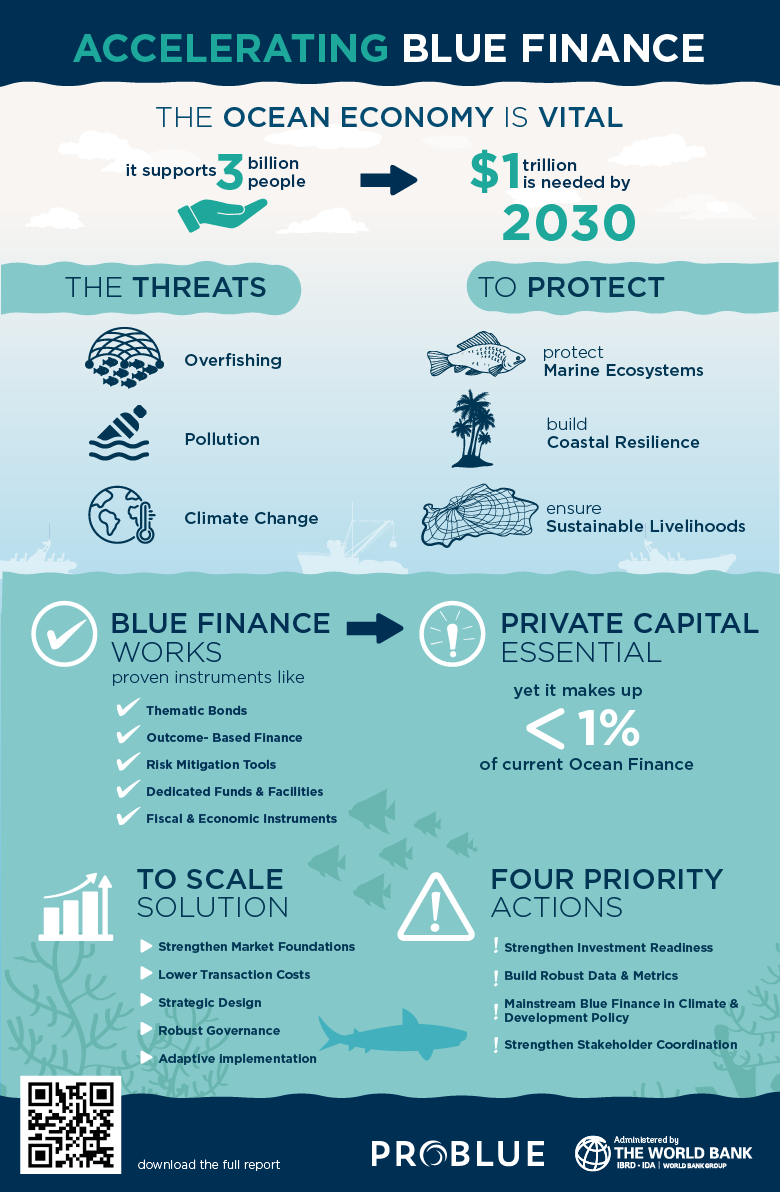
- The ocean drives economic prosperity and environmental stability for billions of people. Yet it is under threat from overfishing, pollution and climate change.
- Public financing isn’t enough to respond. The answer: unlock private capital to conserve marine life, prevent overfishing, and build coastal infrastructure to resist floods.
- Blue finance – or a range of financial instruments – can plug the gap. But accelerating these solutions requires action from governments, private investors and local communities.
To build on this momentum, governments must embed blue finance into national development plans, budgets, and regulatory systems, while strengthening performance metrics and transparency standards. Development institutions and multilateral banks should reinforce these efforts through tailored technical assistance, concessional capital, and de-risking mechanisms. Mobilizing private capital at scale and creating jobs can be boosted through co-designed investment pipelines, blended finance platforms, and partnerships that align incentives and share risks. The next phase of blue finance will not be defined by stand-alone initiatives, but by the ability to mainstream solutions, replicate inclusive models, and deliver integrated action at national, regional, and global levels.
Main Findings
The analysis also examines how these instruments are applied across different sectors, their effectiveness in mobilizing capital, and the frameworks used to monitor and evaluate outcomes. The findings and recommendations aim to inform policy makers, financial institutions, and investors, offering practical recommendations to enhance the effectiveness and reach of blue finance solutions and replicate and scale them up in supporting the blue economy development.
https://www.worldbank.org/en/topic/environment/publication/accelerating-blue-finance-instruments-case-studies-and-pathways-to-scale